
The Jousting Life
Showing posts with label Germany. Show all posts

Thursday, November 7, 2013

Announcing the "Rossfechten Symposium 2014"

The following announcement was written by Jack Gassmann, one of the organizers of the Rossfechten Symposium:

As most riders know, baroque Dressage is martial riding as descended from the teachings of riding masters such as Pluvinel, Cavendish and Xenophon, who taught fighters the riding skills crucial to success. HEMA has in the last 20 years made huge steps both in practice and research towards recreating and understanding Europe’s martial arts. The jousting community has led the charge in recreating armour, ceremony and martial skill. The next step seemed to us naturally to be, to combine what all of these three fields (classical dressage, HEMA and jousting) bring to the table, and so the idea of a symposium took form. A way to bring the expertise of each of these groups together, for each to benefit from the other. We chose the name “Rossfechten Symposium”. In the German fencing manuals, mounted combat is referred to as Rossfechten, not just “mounted combat” but mount rider fighting as one against their opponent.


Rossfechten Symposium 2014(image from "Rossfechten Symposium" website)

We have been amazed by the response we have had from all over. Horsey Hema people from Canada to Russia to Iran and all over the US and Europe have contacted us wanting to attend workshops or teach them. We have such prominent HEMA names as Scott Brown and Alex Kiermayer doing workshops on fencing. Researchers such as Matt Galas and Daniel Jaquet have contacted us about holding lectures. Riders, oldstyle Californios, Dressage experts, professional stunt riders (Suzanne Struben and Jolly Sera who have more than 40 years of film experience) and polo players will be giving riding workshops. Riders of note – such as Douglas Wagner – hope to make it from the US to teach.


Douglas Wagner(photo by AzulOx photography)

Many other riders, teachers and researchers will be present besides. Our goal is not just to provide an event for high-level practitioners, but also as an instrument for people entering the discipline from any direction to get their feet wet and get the support to continue, and for current practitioners to take their game to the next level.

The Symposium will be taking place next year in the picturesque and historic Saarland region of Germany, a four-day event with workshops, lectures, tournaments and presentations from July 24th to 27th. You can be sure to expect good beer, good talks and good times besides. All participants are welcome!

For more information, check out the Rossfechten Symposium website.

Accommodations and location information

Workshop information

We’ve got great things planned, but with your help we could do even more. If you or your company are interested in sponsoring the Rossfechten Symposium, please contact us.


combat training(image from "Rossfechten Symposium" website)

Tuesday, November 20, 2012

Photographer Oliver Dunsch: My Day in Sankt Wendel

Today's guest writer is photographer Oliver Dunsch. He attended "The Grand Tournament in Sankt Wendel", took lots of pictures and wrote up this article about his experiences.
My Day in Sankt Wendel
by
Oliver Dunsch

My friend from childhood days – and still my best buddy in the world – Dirk Breiding came up with the idea of going to "Das große Turnier von Sankt Wendel" ("The Grand Tournament in Sankt Wendel") to do a story about arms, armor, knights and real jousting. We already spent quite a few weekends together on similar events, and I do know quite a bit about the middle ages, armor and effigies. But this one was told to be different, to be unique, THE first REAL tournament since 1512! So he sent me the link to the YouTube promo video from Ben van Koert and I was thrilled from the very beginning.


video by Ben van Koert/Kaos Historical Media

That was months ago. In the meantime he figured out that he would be unable to attend, so my goal was reporting from the event, one whole day, taking as many pictures as I could.


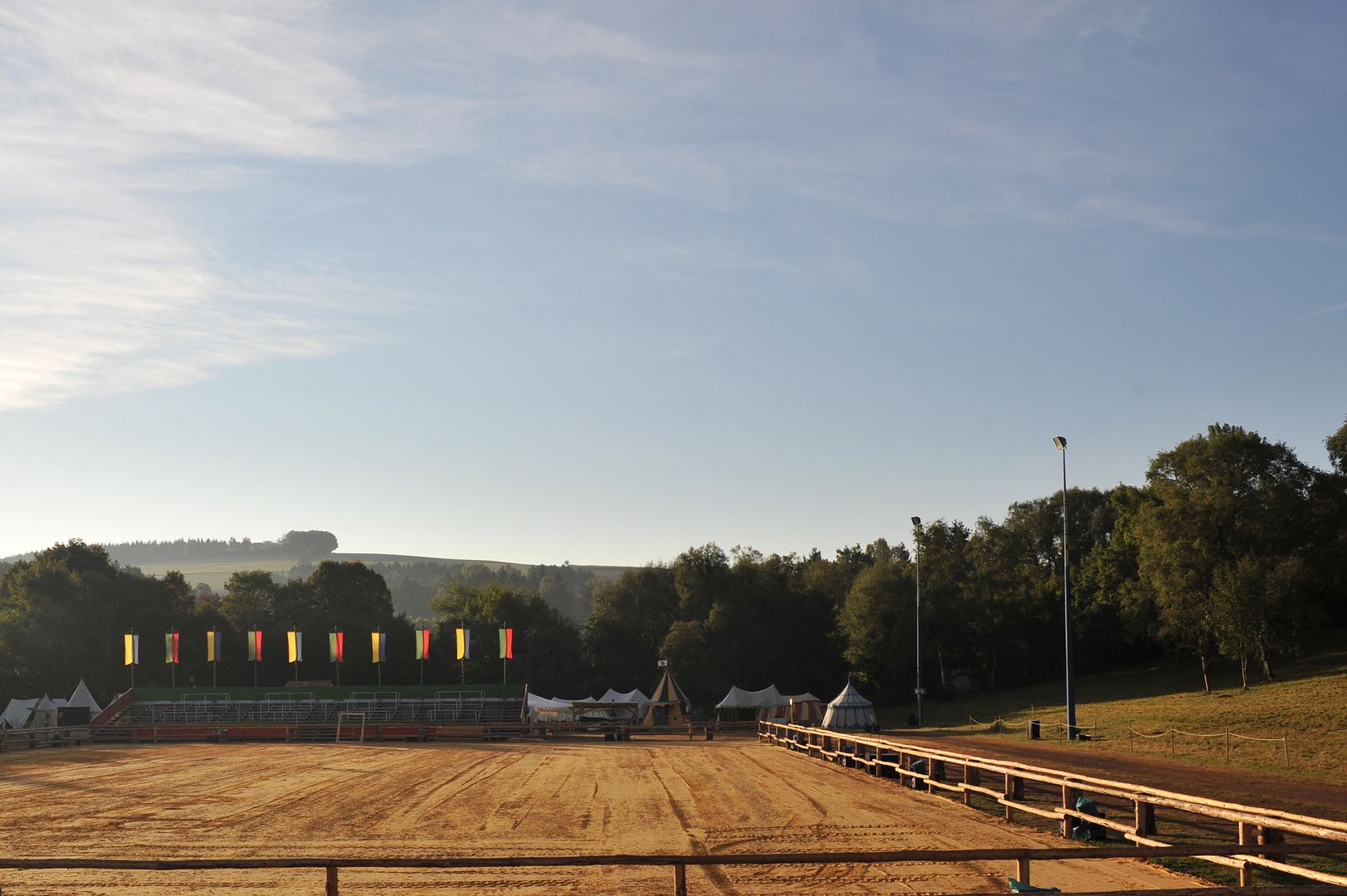
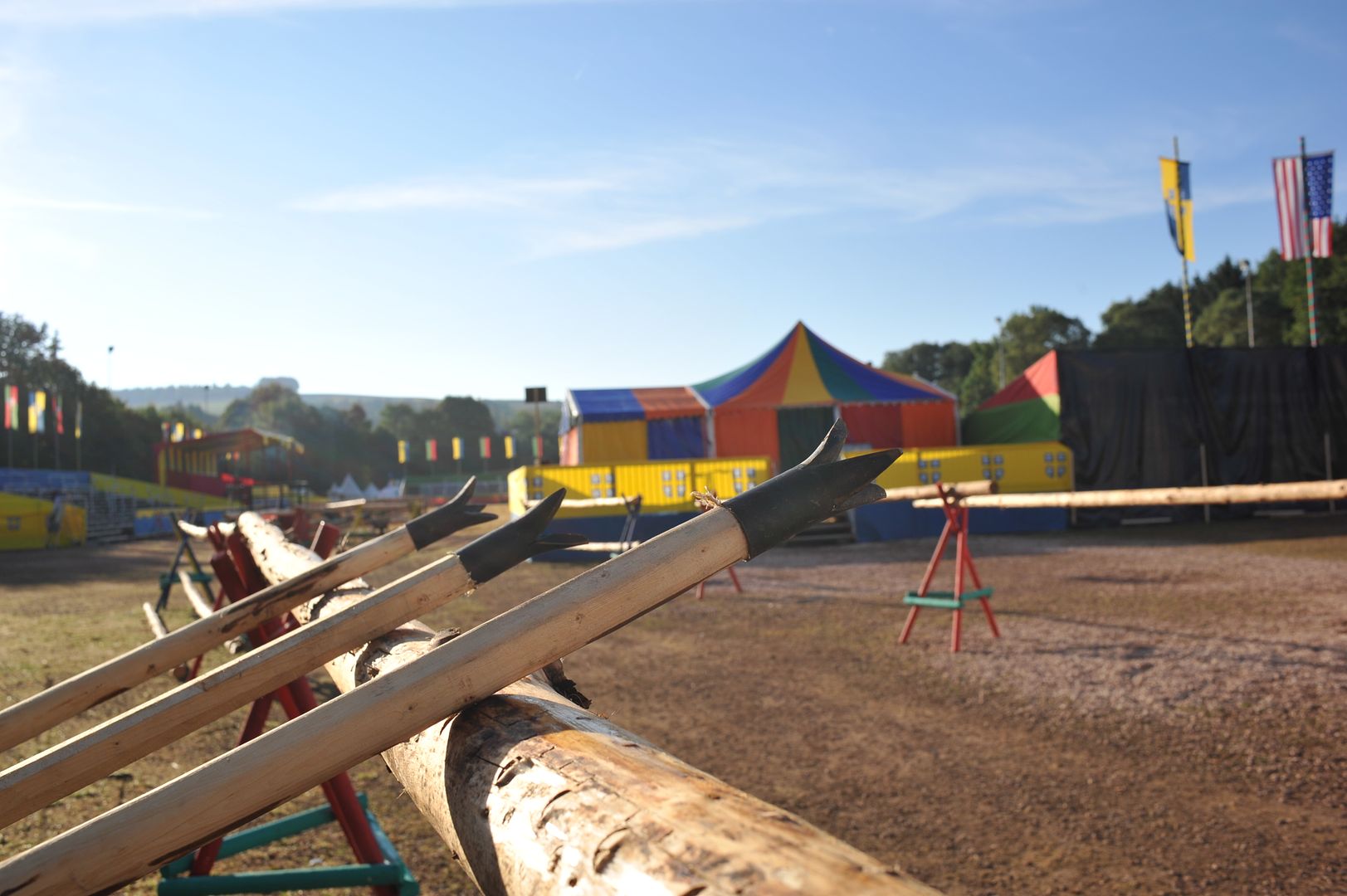
Jousting arena at "The Grand Tournament of St. Wendel"
(photo by Oliver Dunsch Photography)

Still being fascinated by the trailer I got up early Sunday morning, at 4:30 am, September 2nd. I wanted to catch the scene during sunrise with no people around. The weather was perfect, not too cold, a bit foggy which gave the scene a mystic touch.


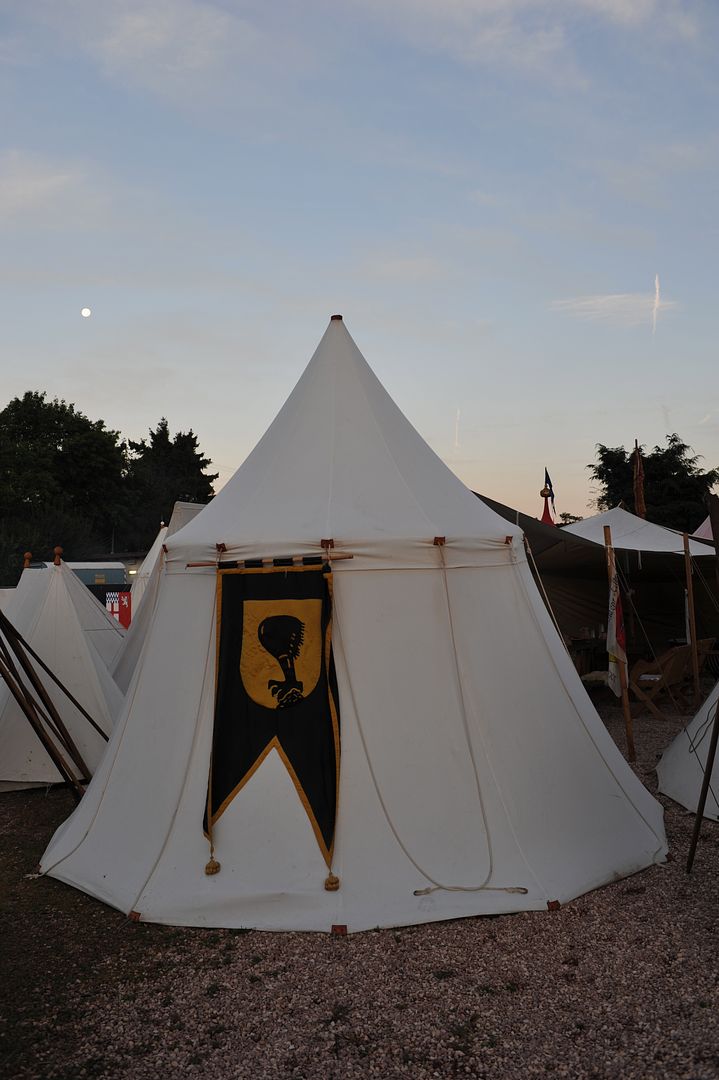
Morning at "The Grand Tournament of St. Wendel"(photo by Oliver Dunsch Photography)

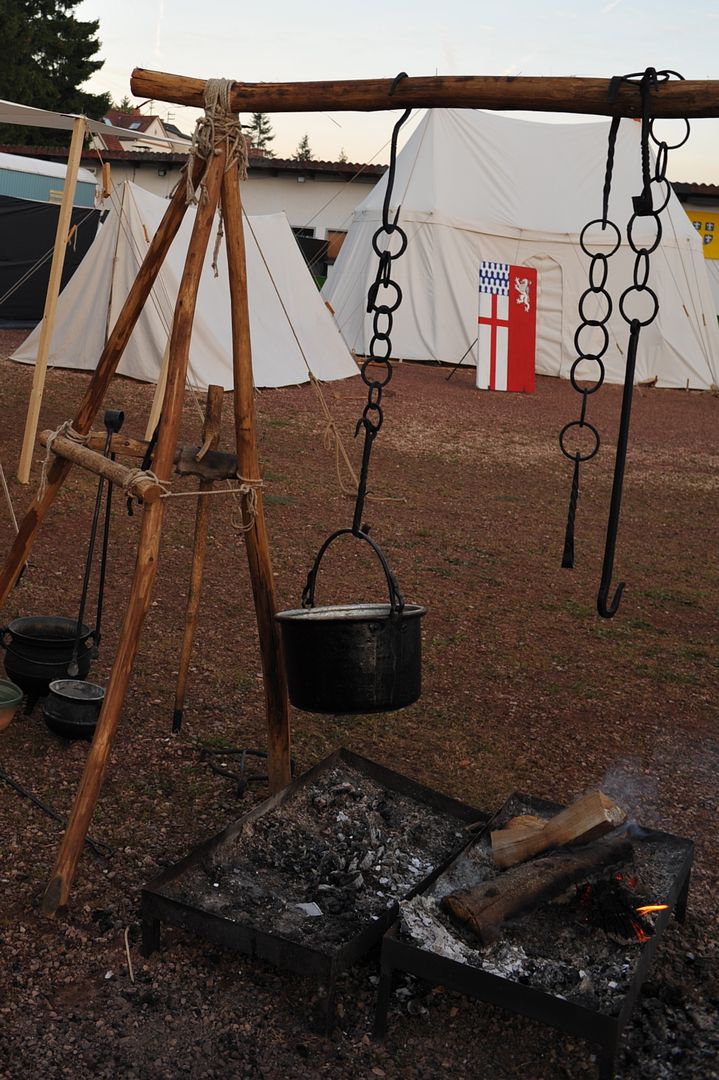
There were campfires still smoldering and the remains of a "Saufgelage" (drunken revelry) on huge tables. With a bit of imagination you could think of what happened the days before.


Smoldering campfire(photo by Oliver Dunsch Photography)

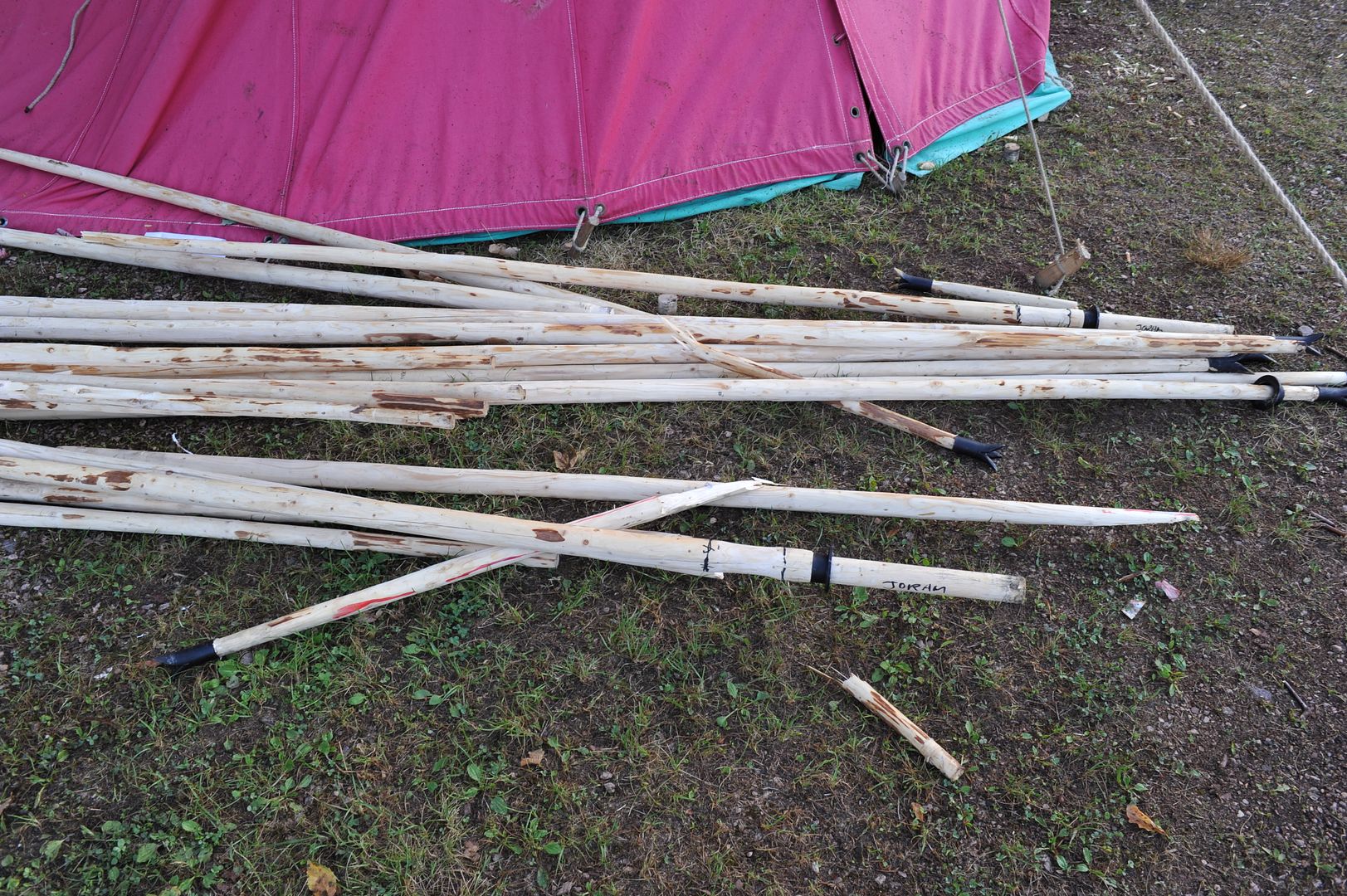
A huge pile of broken lances with names on were telling stories from the Friday and Saturday jousts.


Broken lances(photo by Oliver Dunsch Photography)

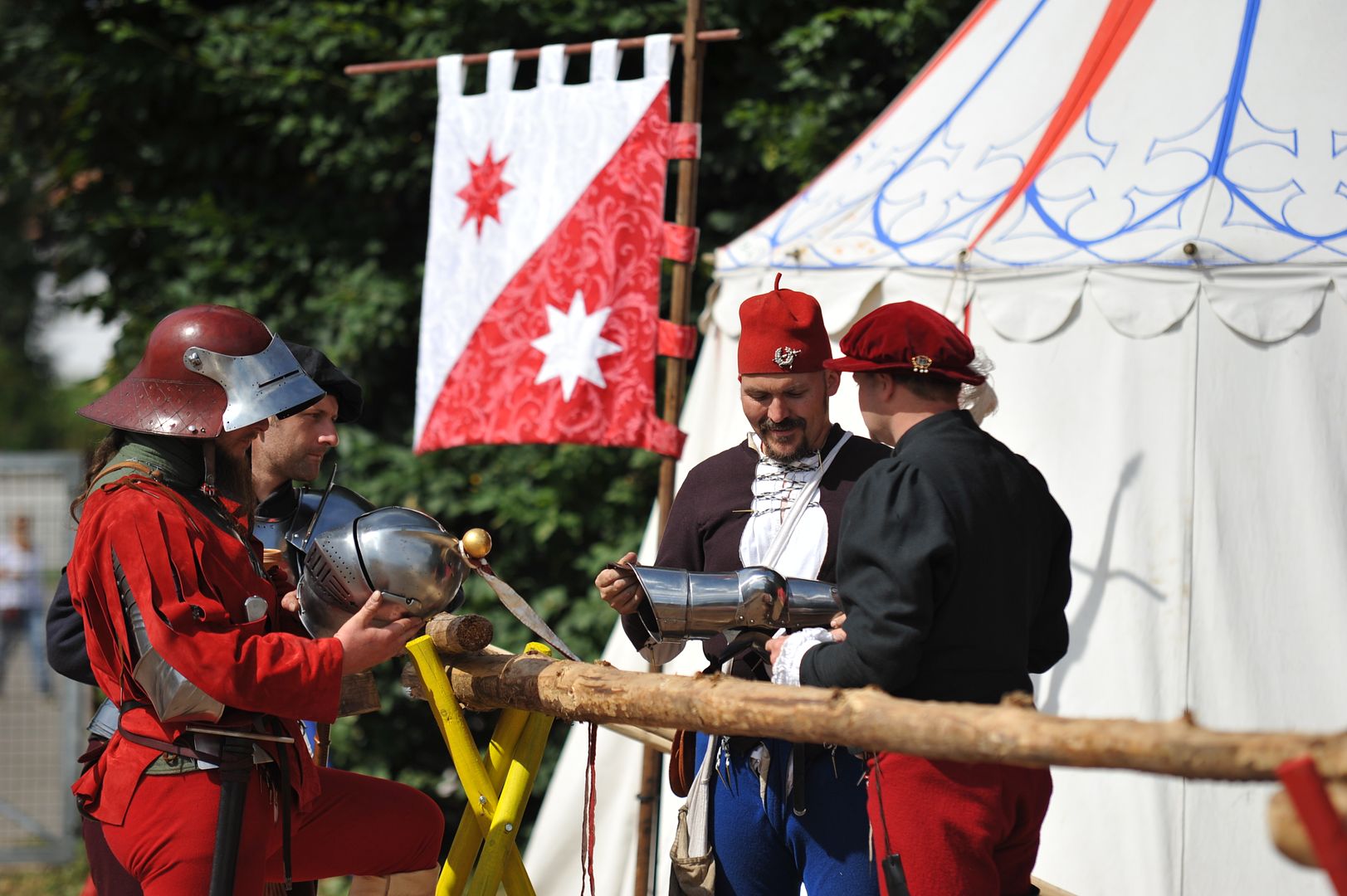
And then, with the sun, people began to crawl out of their tents, all wearing beautifully manufactured clothing, examples of true craftsmanship. That was the first time I was sure I wanted to wear something matching on my next photo-job during a similar event.


Morning discussion about armour(photo by Oliver Dunsch Photography)

Even though it was obvious that I did not belong to the middle age crowd, everyone was friendly, gave me the feeling of being part of the family. And that continued for the rest of the day.

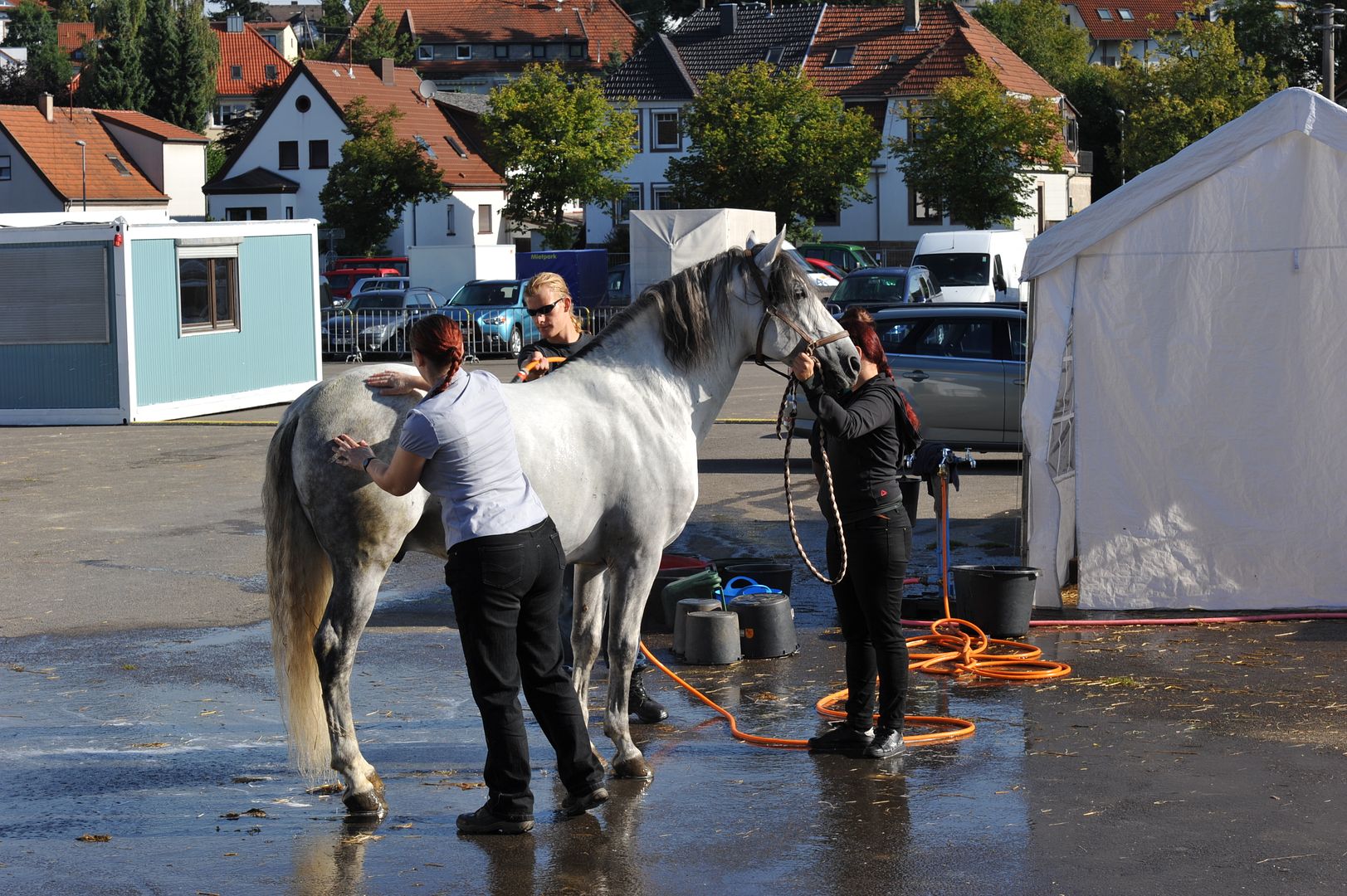
Squires and knights preparing for the final day, beautiful horses being fed and groomed.


Preparing the horses(photos by Oliver Dunsch Photography)

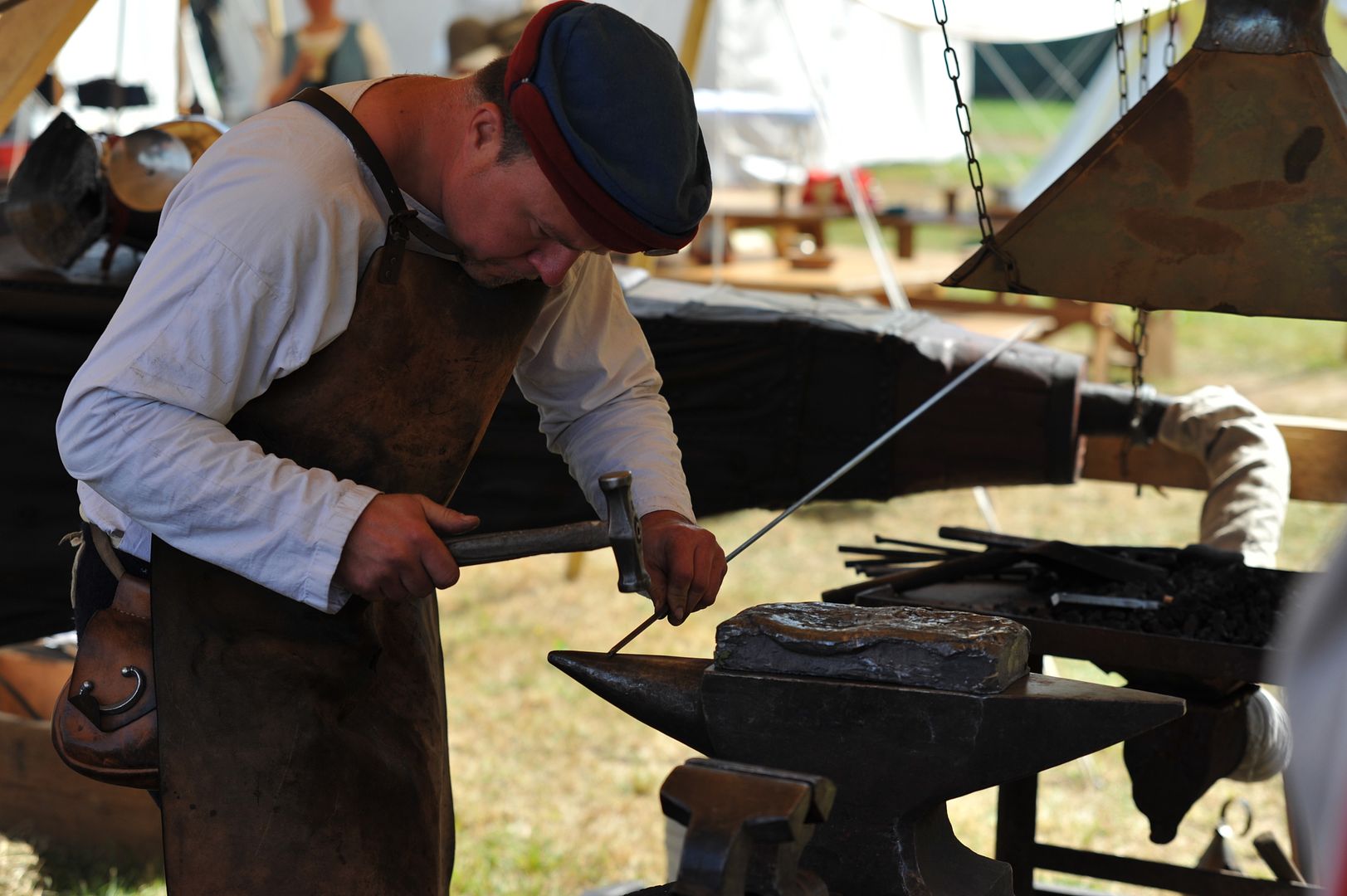
And many more helpers doing a fabulous job to not create a fiction, but to live real history.


Blacksmith at "The Grand Tournament of St. Wendel"
(photo by Oliver Dunsch Photography)

Or even real life, with real virtue, with real honor and true comradeship, placed in the scenery of the middle ages.


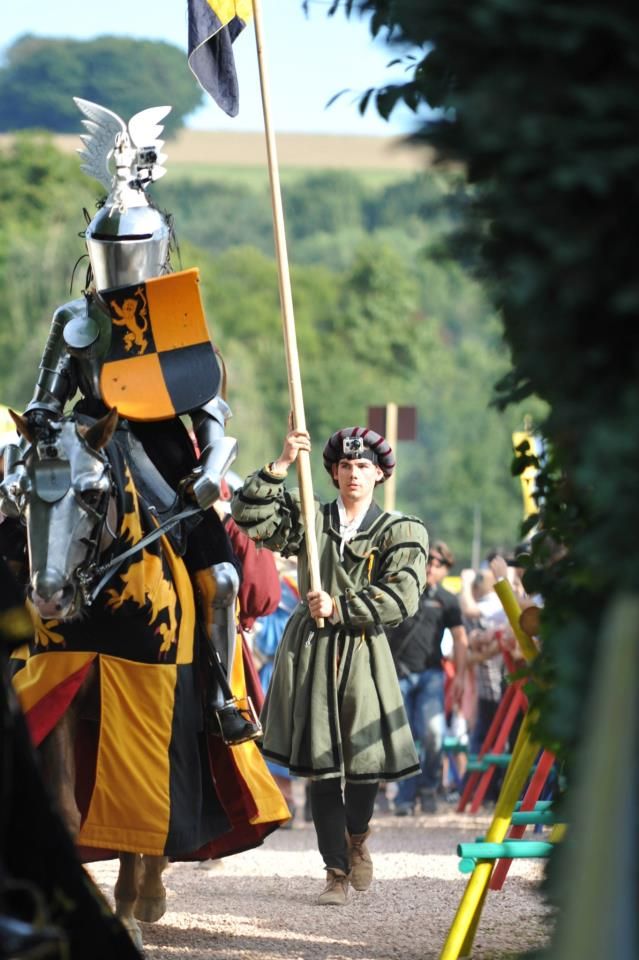
Left - Max Knegjens carries the banner for Luke Binks
Right - Andreij Pfeiffer-Perkuhn helps Andreas Wenzel to mount
(photos by Oliver Dunsch Photography)

Probably to have the audience believe even more in what they were privileged to watch and be part of.


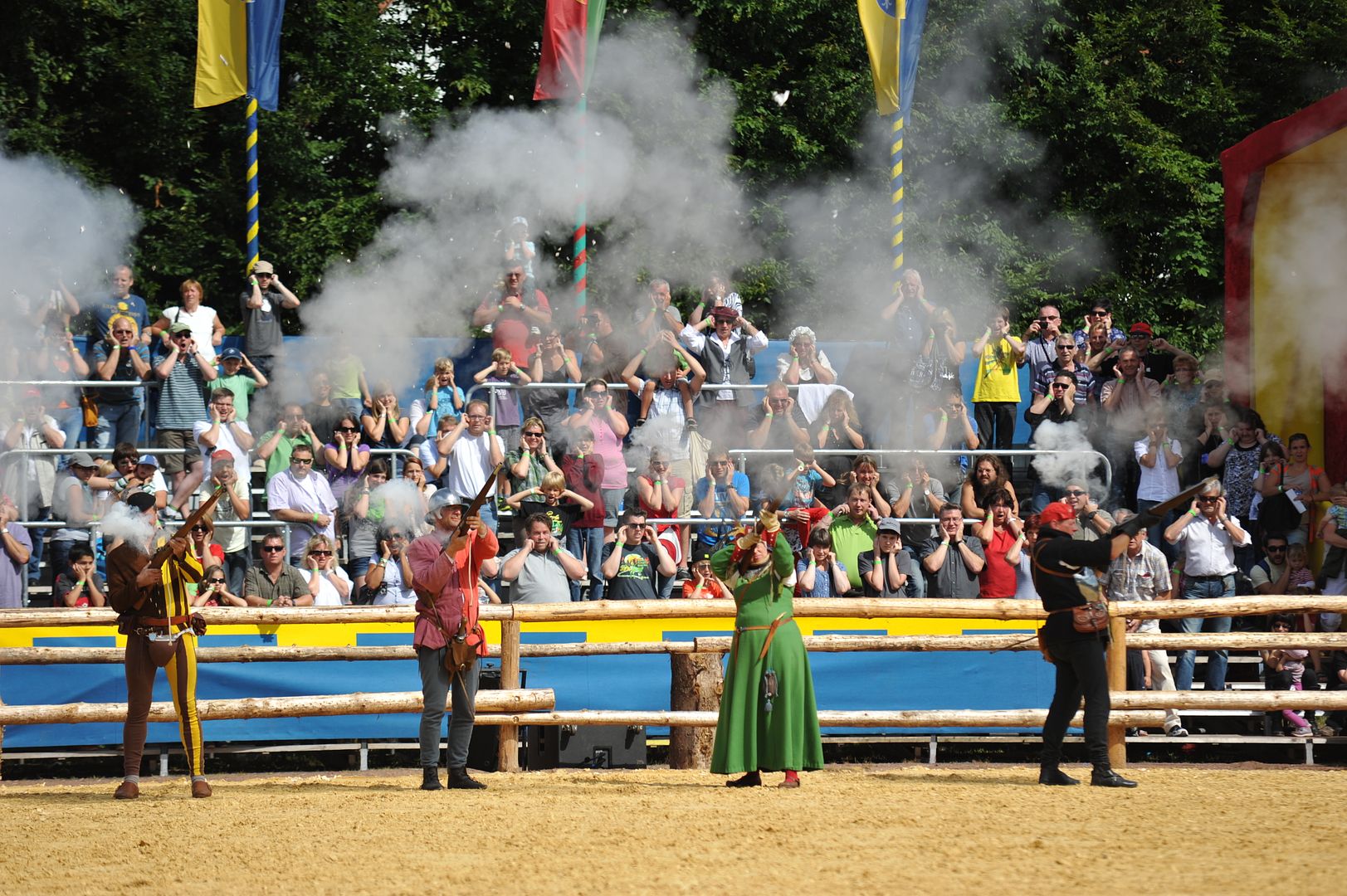
Black powder guns(photo by Oliver Dunsch Photography)

I got more and more involved in what everyone was working for and what everyone truly believed: A passion with the potential of making a better human being of every single participant and every single visitor.

The whole program was very interesting, was fantastic and every single part was performed with pride and professionalism: from the hunting scenes


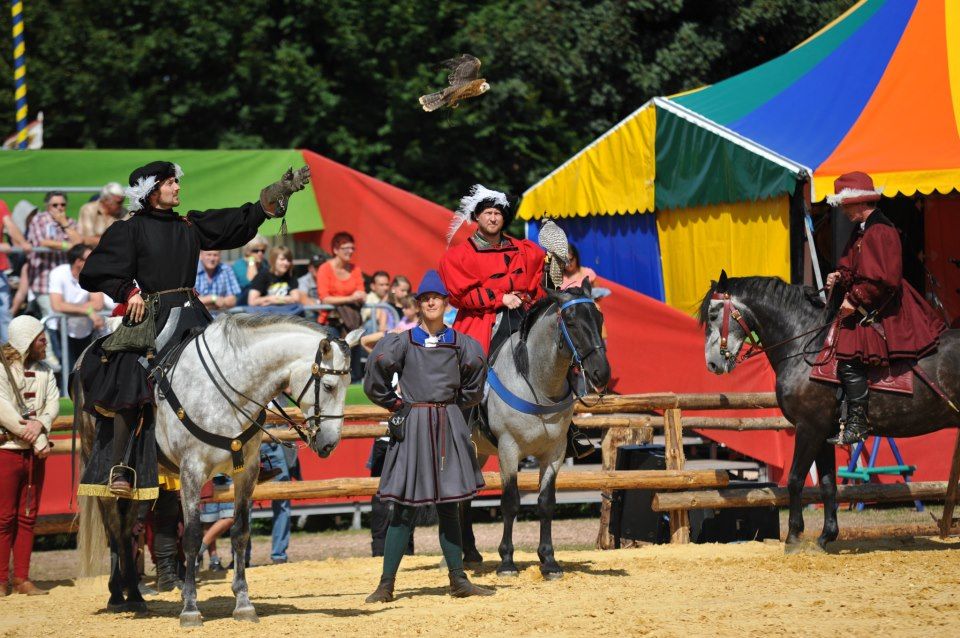
Arne Koets and Joram van Essen demonstrate falconry
(photo by Oliver Dunsch Photography)

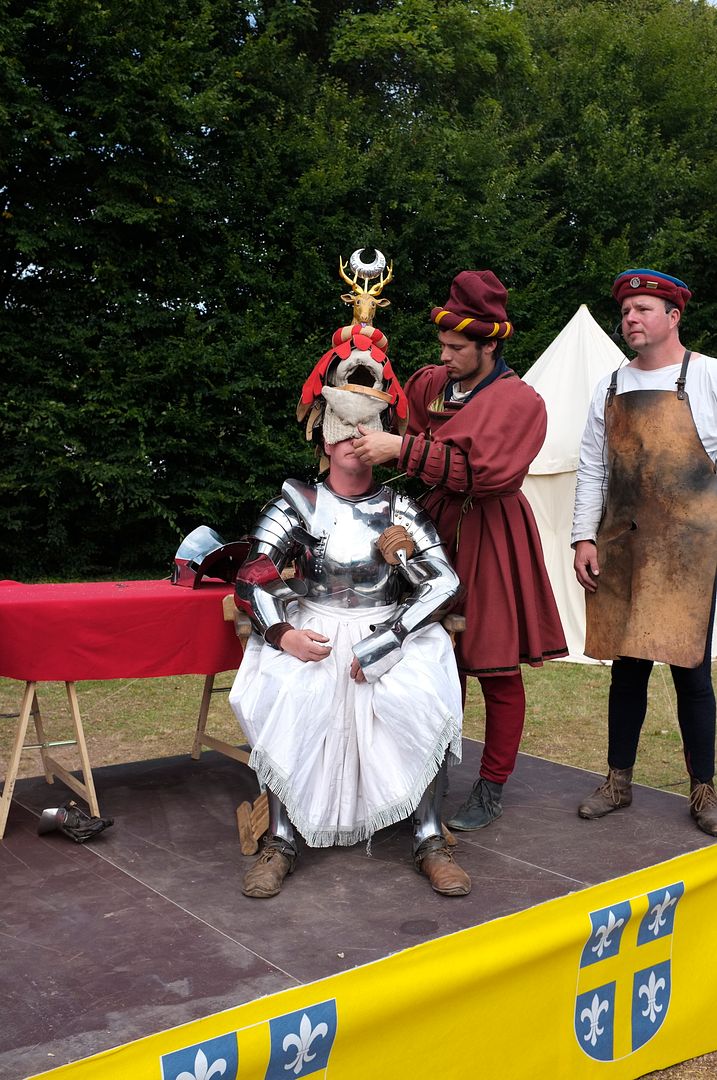
to the armor-plating demonstrations,


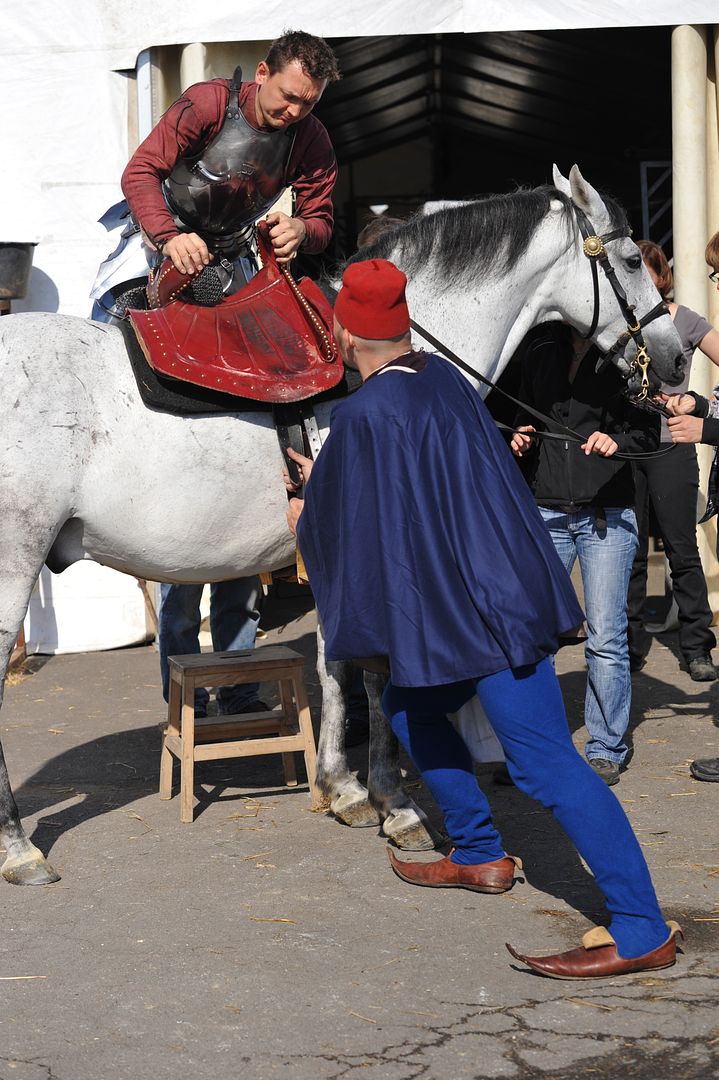
left - Andreij Pfeiffer-Perkuhn helps Andreas Wenzel with his armour
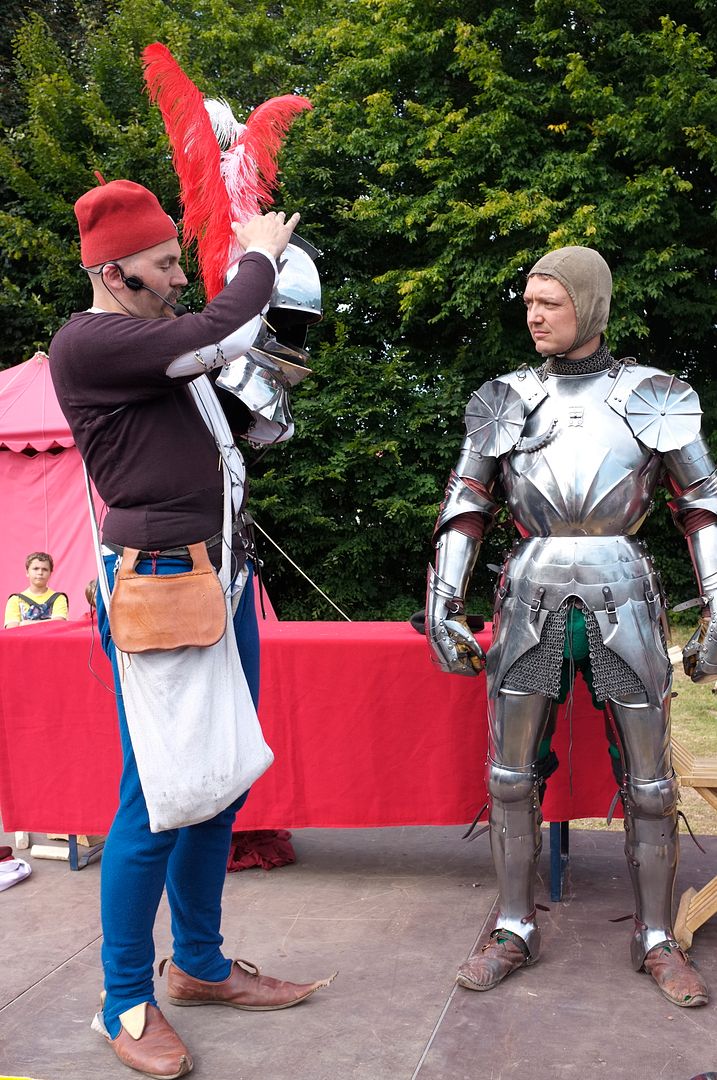
right - Dominic Sewell is helped with his armour
(photo by Oliver Dunsch Photography)

from the cannons to the swordfights, from the joust to the melée.


Lances with coronels ready for jousting(photo by Oliver Dunsch Photography)


Toby Capwell, Arne Koets, Andreas Wenzel, Wouter Nicolai and Luke Binks enter the field for the melee(photo by Oliver Dunsch Photography)


Per Estein Prøis- Røhjell, Dominic Sewell, Petter Ellingsen, Alix van Zijl and Joram van Essen wait for the start of the melee(photo by Oliver Dunsch Photography)

And these two events, the joust and the melée, were the main events, the reason for everyone to come to St. Wendel. To find what we nowadays would call the world champion of jousting.


Per Estein Prøis- Røhjell jousts Petter Ellingsen(photo by Oliver Dunsch Photography)


The mounted melee at "The Grand Tournament in Sankt Wendel"
(photo by Oliver Dunsch Photography)

At the end of the last day, after the last melée, it was obvious that not only the one with the most points won that beautiful sword, but also the one every other competitor thought would be a worthy owner of that fantastic prize – Joram van Essen – and that to me made all the difference.


Joram van Essen during the mounted melee(photo by Oliver Dunsch Photography)

There was neither jealousy nor envy, but I am sure there now is the need for another tournament next year, to give all these brave knights the chance to win the world's most important tournament.


Joram van Essen holds the tournament prize sword
(photo by Oliver Dunsch Photography)

This year, the success is the prize everyone carries home. The success of a great event I had the privilege to be part of.

I had great people by my side, like Andreij Pfeiffer-Perkuhn, Andreas Wenzel and last but not least my friend Tobias Capwell.


Dr. Tobias Capwell at "The Grand Tournament of Sankt Wendel"
(photo by Oliver Dunsch Photography)

I came to take great pictures, and I learned a lot about the jousting nowadays. Thanks again guys, thanks to everyone I am now friends with on Facebook! See you next year and at every single comparable event. I got infected.


People who helped create "The Grand Tournament of St. Wendel"
(photo by Oliver Dunsch Photography)

To see more of Oliver's pictures from Sankt Wendel, follow this link.
.

Thursday, November 15, 2012

Thursday, October 25, 2012

Interview with Per Estein Prøis-Røhjell: Jouster at "The Grand Tournament in Sankt Wendel"

Per Estein Prøis- Røhjell, called Pelle by many in the jousting community, was one of the jousters at “The Grand Tournament in Sankt Wendel”.


Per Estein Prøis-Røhjell(aka Pelle) at Sankt Wendel(photo by Rozemarijn Keurning)

According to “The Knights” page of “The Grand Tournament of Sankt Wendel” website:
Per and his wife, Hanne, run a riding school in Norway called Trollspeilet. Their appetites for the history of horseback fighting has led them to various places, sometimes astray, but Per has now found a path that leads toward the goal of being a realistically good mounted knight!

He learns from a few different sources: he has studied with the Hofreitschule in Bückeburg, he has trained with Arthur Kottas Heldenberg of the Spanish Riding school in Vienna, and trains regularly with a Portuguese bullfighter and Working Equitation world champion.

He finds that this mix gives him a deep insight in from several different angles – hopefully it will make him dangerous on the field of battle as well!


Per Estein Prøis-Røhjell jousts at Sankt Wendel(photo by Rozemarijn Keurning)

Per aka Pelle was kind enough to take the time to answer a few questions about his experiences during “The Grand Tournament of Sankt Wendel”.

How did you become involved with “The Grand Tournament of Sankt Wendel”(GTSW)?

Pelle: I was introduced to the top level of jousting through Luke Binks, who lives with my stepdaughter. He thought my skills belonged at this level, and had me meet Arne Koets – the hub of the wheel that started rolling at St. Wendel.

Tell me the name of and a little about your history/relationship with the horse you rode in the GTSW.

Pelle: My horse is named Hugo. He is a mixture of unfitting blood, but his Knabstrupper ancestry luckily shows in the spots on his bum! He is the first horse I have owned, and he's been with me for 9 years. He is a thoroughbred at heart, and really dislikes fighting. However, he is very maneuverable, and very strong in his hindquarters. My friends tell me he is a nightmare to ride under difficult circumstances, and I am afraid I would have to agree! Still, he performed very well during this event, with only a few troublesome moments.


Per Estein Prøis-Røhell on Hugo fighting Luke Binks in the melee at St Wendel
(photo by Rozemarijn Keurning)

Please describe the person, place or thing that made the biggest impression on you when you first arrived at/during the days leading up to “The Grand Tournament in Sankt Wendel”.

Pelle: The thing that made the biggest impression on me, was the Norwegian flag over the arena, actually. However, I would like to point out that I have rarely enjoyed the privilege of being involved with so many strong personalities, without anyone beating their chests, or standing out more than the others! None were invisible, and none seemed to think themselves above anyone else.

Please describe one or two of your favorite non competition related moments during the time you were in Sankt Wendel.

Pelle: I loved the camaraderie with everyone, for instance the Artillery guys, who kindly took us in and shared their fire in a cool night. Also, every moment spent just hanging out with such a crew, is worth it's weight in, eh, steel...

Please describe one or two(or more) of your favorite moments during the competition of “The Grand tournament of Sankt Wendel”.

Pelle: I have three favorite moments, I think. First, the immense disappointment when Joram van Essen got injured, and I thought I would not be allowed to joust: I think that match has the potential to be epic! This was followed by huge excitement when Petter Ellingsen accepted the challenge and would risk head- hits in the heavy division! I feel we delivered a joust worthy of Vikings, and I actually shed a tear of relief: this is only my fourth tournament, and I was not sure I belonged in this crew, so please forgive my sentimentality!


Per Estein Prøis-Røhell jousts Petter Ellingsen at Sankt Wendel
(photo by Oliver Dunsch)

Second, or first, I cannot rank these: the last melee, with Joram – the human tank – keeping my back clear with many opponents! Totally epic to be a part of! The feeling of having a true knight protecting you so well, that you can utilize whatever ability you possess to really clean the field, is beyond my ability to describe!

Also, I encourage every competitor to closely watch how Luke Binks NEVER takes a cheap shot in the joust. He does not, in my opinion, jeopardize safety for points. And that is knightly too.

Arne Koets was chosen by the Ladies' Jury as the “Winner of the Prize for Highest Bravery”. Why do you think he was chosen?

Pelle: It is obvious to all why Arne was chosen: he did, as many have stated, lots and lots of stuff to NOT put himself forward, and rather promoted those he felt deserved it. This resulted in the ladies choosing him as the bravest!


Arne Koets dances with Rebecca Guldenring(photo by Rozemarijn Keurning)

Andreas Wenzel won the “Joust of the Squires”. What would you like to say about his performance during the tournament?

Pelle: It is my understanding that Andreas did very well with a horse that is not very easy to work with during the tournament. As a horse-trainer and riding teacher, I can very much relate to the challenges such a horse puts upon his rider, and the ladies made sure to award him for his hardships!

Even though he was injured and unable to complete the competition, Joram van Essen still won the overall tournament, in part due to other competitors contributing to his score. Arne Koets gave Joram enough of his own points to put Joram in first place ahead of Arne. Please explain how and why that happened and what part you played in this point exchange.

Pelle: The points exchange was, in my opinion, un-important! Chivalrous deeds rarely need points attached to them in order to show clearly, and if anything was clear in this tournament, it was that Joram van Essen was the most awesome competitor! Arne Koets made sure that there was no doubt about this, by giving away points the ladies had awarded him.

What would you like to say about/to the squires, ground crew and/or others who helped you during your participation in the GTSW.

Pelle: The squires and ground crew were impeccable. I never had to doubt anything about my horse being ready, thanks to Rozemarijn[Editorial note: Rozemarijn also provided many of the pictures for this article], and I was taken so well care of by Jack, that I hardly ever had to even spare a thought for my armour or weapons. Impeccable, and a fair bit awesome in itself. It is not easy caring for a stressed-out adrenaline-junkie with a half-mad horse.


Per Estein Prøis-Røhell gets help with his armour(photo by Rozemarijn Keurning)

What would you like to say about/to Arne Koets and the other organizers of the GTSW?

Pelle: To the organizers: DO IT AGAIN!

What would you like to say about your overall experience at the GTSW?

Pelle: Overall experience: I WANT MORE!


Per Estein Prøis-Røhjell at Sankt Wendel(photo by Rozemarijn Keurning)

Friday, September 14, 2012

An Interview with Alix van Zijl: Competitor at "The Grand Tournament in Sankt Wendel"

Alix van Zijl was one of the competitors at “The Grand Tournament in Sankt Wendel”. It is interesting, though not significant, that she was the only female competitor.


Alix van Zijl(photo from Facebook)

In jousting, as in many equestrian sports, competitors are not separated by gender, and both male and female participants must meet the same requirements. For that, and other reasons, the organizers of "The Grand Tournament in Sankt Wendel"(GTSW) chose not bring attention to the fact that one of the participants was female.

Alix was kind enough to answer a few questions about her experiences during the GTSW.

How did you become involved with “The Grand Tournament of Sankt Wendel”?

Alix: I've known Arne Koets for a long time, and he asked if I could supply two jousting horses for Sankt Wendel, and if I I wouldn’t mind bringing my armour along as a spare rider. In the end, there were two people who couldn't make it for the melee, so I could join.

Tell me the name of and a little about your history/relationship with the horse you rode in the GTSW.

Alix: The horse I rode is a 5-year old Andalusian stallion, called Torero. I bought him a year ago in Spain. He is a very willing horse, and very sensitive, which makes him a charm to ride in the melee. You just have to think what you want, and he'll do it for you. In the joust, he goes straight as an arrow and as fast as well.


Alix van Zijl on Torero(photo by Hanno van Harten)

Please describe the person, place or thing that made the biggest impression on you when you first arrived at/during the days leading up to the GTSW.

Alix: I was really impressed by the whole group, how much people still want to learn, even though they are in the top 10 already. Most impressed I was with Petter Ellingsen, who had to change horses on the (very early) morning of the first show day.


Petter Ellingsen(photo by Oliver Dunsch)

He did a wonderful job, adjusting fast to the horse, and growing in the joust itself, ending with a spectacular double hit with Per Estein on the last day.

Please describe one or two of your favorite non competition related moments during the time you were in Sankt Wendel.

Alix: Well…meet Arto Fama, and you’ll know enough about the joking around.


Arto Fama(left) and Max Knegjens(right)(photo by Hanno van Harten)

Please describe one or two of your favorite moments during the competition of “The Grand tournament of Sankt Wendel”.

Alix: I was more than impressed by the riding of Joram van Essen during the last melee. I know his horse Zogo very well, and I know he is a bit “stug” as we say it in Dutch, a bit unflexible. The fact that he succeeded to do as an example: flying canter lead changes, not once but regularly, is impressive.


Alix van Zijl(left) and Joram van Essen(right) ride together during the final melee at "The Grand Tournament of Sankt Wendel"(photo by Wendy Van Harten-de Bruin)

And my ears are still ringing from the blows I got on the second day. Without a doubt, I was out. So much fun!

What was it like to be the only female in the competition?

Alix: It is an honour to be part of a group with such high standards. The fact that I am a female doesn't really count with these guys, which suits me very well. In a way it doesn’t matter, as long as one is safe and does a good job, has the right attitude and has a good armour, one is welcome. That is the way it should be. I do my best to be strong enough to handle the lances and the weapons just for the horses' and riders' sake alone.


Left to right, Wouter Nicolai, Per Estein Prois-Rohjell, Alix van Zijl, Andreas Wenzel, Joram van Essen, Wolfgang Krischke, Arne Koets, Toby Capwell, Petter Ellingsen, Dominic Sewell and Luke Binks(photo by Hanno van Harten)

Why did you compete in the melee, but not in the joust?

Alix: For the joust with solids I am not ready, yet. My armour needs a grand bascinet, not an armet[types of helmets], and the arret[lance rest] wasn’t even attached, yet. My horse and I can present a good target during the joust, but for lowering the lance safely… I need this winter to get ready and safe. If Arne would have lacked a jouster, I wouldn’t have minded to be a target, but hitting others… No, not yet.

How did you feel about keeping your gender hidden from the audience?

Alix: I didn’t really mind. I don’t like the attention if it’s just about my being a woman… If it’s about my skill that is a different thing altogether.

Arne Koets was chosen by the Ladies Jury as the “Winner of the Prize for Highest Bravery”. Why do you think he was chosen?

Alix: Arne won that title with good reason. He was bothered by hurting Joram, and showed it this way. It is the way he jousts/fights/plays.


Arne Koets(photo by Rozemarijn Keuning)

Andreas Wenzel won the “Joust of the Squires”. What would you like to say about his performance during the tournament?

Alix: It is impressive what Andreas could do together with his horse. Sigi is not an easy horse, and Andreas just did it – the joust, the melee – as if he had been working with that horse for years, and I know for a fact that he hasn’t.


Andreas Wenzel on the Spanish stallion Sigismund(photo by Oliver Dunsch)

Even though he was injured and unable to complete the competition, Joram van Essen still won the overall tournament, in part due to other competitors contributing to his score. Arne Koets gave Joram enough of his own points to put Joram in first place ahead of Arne. Please explain how and why that happened and what part you played in this point exchange.

Alix: Joram won with thanks to Arne and Petter, but I think it was very well deserved. His horse was very good during the joust, well trained. He hit regularly and safely.


Joram van Essen jousts on his Murgese stallion Zogo(photo from the GTSW website)

And during the melee he fought well too, with the last melee as a beautiful example how good.

What would you like to say about/to the squires, ground crew and/or others who helped you during your participation in the GTSW.

Alix: The ground crew did a marvelous job. And as I was grooming as well, I know how short an hour is to change from jousting gear on a horse to melee gear. That was honestly amazing!


Alix rests between acting as both competitor and ground crew
(photo by Hanno van Harten)

What would you like to say about/to Arne Koets and the other organizers of the GTSW?

Alix: It is great that this tournament came to be! It was very well organized, not just the joust itself, but everything around it as well.

What would you like to say about your overall experience at the GTSW?

Alix: Againagainagain!


Alix van Zijl(photo by Hanno van Harten)

Monday, September 10, 2012

An Interview with Dr. Tobias Capwell: Jouster at "The Grand Tournament in Sankt Wendel"

One of the jousters involved in “The Grand Tournament of Sankt Wendel” was highly regarded academic writer and museum curator, Dr. Tobias Capwell, known as “Toby” to many in the jousting community.


Dr. Tobias Capwell(photo by Ulrike Otto)

According to “The Knights” page of the official GTSW website:
An internationally-acknowledged expert on medieval and renaissance arms and armour, Dr. Tobias Capwell has been competing in major international jousts and tournaments for nearly twenty years. Recently, he has participated in events in the UK, USA, Switzerland, Denmark and Australia. Originally from the United States, Toby has been resident in the UK since 1996, where he has relentlessly pursued his passion for chivalric culture, both in the library and on the back of a horse.

When not roaming the world as a 'knight errant', Toby is Curator of Arms and Armour at the “Wallace Collection” London, which includes one of the world's great collections of medieval and renaissance weapons and armour.

He is the author of numerous books and articles on the fascinating subjects of knights, armour, weapons and horsemanship. He also appears regularly on television as a documentary presenter and interviewee.

Many of Toby's numerous books can be found listed on his Amazon.com author page though for some reason, his book,"Masterpieces of European Arms and Armour in the Wallace Collection"(which is listed under "Recommended Books" on the TJL sidebar) is not currently included on the page. [Yes, I filled out the form to have it added.] Meanwhile, Toby was kind enough to take time from his busy schedule to answer a few questions:

How did you become involved with “The Grand Tournament in Sankt Wendel”(GTSW)?

Toby: I was approached by my academic colleague Dr. Alfred Geibig, curator of the Kunstsammlungen der Veste Coburg and historical adviser on the project. I then recommended that he speak to Arne Koets and Wolfgang Krischke about making the dream of an authentic joust a reality.


Wolfgang Krischke on Olymp, his Knabstrupper stallion(photo by Oliver Dunsch)

Please describe one or two of your favorite moments during the competition of “The Grand tournament of Sankt Wendel”.

Toby: My joust against Joram van Essen on the second day was one of the best sets of my career. It included a strike to the helm (me), and several broken lances (mostly him), with at least one where the lance broke into three pieces.


Toby Capwell(left) jousts Joram van Essen(right)(photo from GTSW website)

This was particularly satisfying for me, as the three-piece break is what is often illustrated in historical depictions of jousts well fought. I have some impressive bruises on my hips and glutes from getting slammed hard into the cantle of my saddle.  I expect a bruise on the upper right arm. But not on the butt!

It was unfortunate that you were injured and unable to complete the competition. Could you please describe how you were injured, what was done for the injury and how you are doing now?

Toby: Yes, that was the only downer in an otherwise wonderful set. It’s a small thing – a coronel hit my hand in the first course.


A steel coronel on the end of a solid tapered lance(photo by Ulrike Otto)

Two of the tines missed me but the third struck me between the thumb and metacarpal plates of my gauntlet. I was injured on the first course of a four course set. I then completed the set, running the remaining three courses, and breaking a couple lances on Joram. So the last three of my four lances have blood on them, a little on the second, a little more on the third, a little more than that on the last, which is the one in the image. A nice German surgeon sewed me up, and I hope to be fine to compete in California in October.


Toby Capwell's injured hand with the lance from his fourth pass against Joram van Essen (photo by Oliver Dunsch)

The moral of this story is… use vamplates.

I suppose I should have known that, but we had a lot to think about getting this thing to happen. It's all the more galling from a scholarly point of view because the pictorial sources I used to reconstruct my jousting armour (the famous Inventario Iluminado of Charles V) illustrates vamplates as a key element of jousting armour of this type. This is what can happen when you overlook the little details I guess. It won’t happen again.

Even though he was injured and unable to complete the competition, Joram van Essen still won the overall tournament, in part due to other competitors contributing to his score. Arne Koets gave Joram enough of his own points to put Joram in first place ahead of Arne. Please explain how and why that happened and what part you played in this point exchange.

Toby: I don’t think that is what happened exactly. First of all, when Joram was injured, he was already so far ahead on points nobody could really have caught him. Furthermore, although the winner was one individual, part of this, by necessity, was a team event. Points were awarded to each member of the winning team in the tourney (or mêlée). Your team wins, you personally get points towards your total score.

After Joram and I were injured, we were still both technically on a specific team, so a call was made to continue awarding points to us in the team event, if our team won. We debated the rights and wrongs of it, and decided to go that way, although it would have been just as reasonable to eliminate the injured completely. The medieval and renaissance sources often talk about jousters being ‘counted as dead’, i.e., being eliminated because of injury or for some other reason. I didn’t really care either way.

Anyway, Joram deserved whatever extra points he got... (Arne may have given his points to Joram at this stage. I suspect this might have happened but I don’t know. It would be typical of Arne to give all his points away – to someone he thinks is better than he is, or to a beautiful woman, or a pretty flower, a cute puppy, etc etc)


Arne Koets(photo by Hanno van Harten)

...because of the way Joram rode in the final tourney.

It was really spectacular. Joram, no armour, no weapon, just acting as an offensive blocker for his teammates. The upshot of the matter is, Joram was the best man there, and he would have won regardless of nick-picking about points or token gestures from his brother jousters. Good jousters have little interest in points in my experience.


Joram van Essen riding in the final melee with an injured hand(photo by Oliver Dunsch)

What would you like to say about/to the squires, ground crew and/or others who helped you during your participation in the GTSW.

Toby: They were brave! There were a lot of very active horses on that field, ridden in some cases (like me) by guys who couldn’t see very well! And then there were the steel coronels flying through the air... They all worked their butts off, but then, they always do. It's part of what it takes to make these things happen.


Alix van Zijl and Onee Enerud carrying mounting blocks(photo by Oliver Dunsch)

They do a hell of a lot that nobody ever sees too. For example, the Team Capwell Crew Chief, Adam des Forges, was the one who took both me and Joram to the hospital, and sorted everything out with hospital staff who spoke no English, and kept our spirits up always. The infantry know that’s what goes with the territory when you get involved with cavalry, damn them.


Left to right: Wouter Nicolai, Toby Capwell, Arne Koets, Andreas Wenzel and Luke Binks(photo by Hanno van Harten)