The Jousting Life
Showing posts with label Wouter Nicolai. Show all posts

Monday, June 22, 2015

Video of St. Hallvard's Jousting Tournament 2014

Back in 2014, from May 23 through May 25, the St. Hallvard's Jousting Tournament was held as part of the Oslo Middelalderfestival in Oslo, Norway. The tournament was organized by jouster Petter Ellingsen of Ridderhest and featured ten jousters from Norway, the Netherlands, Germany and Australia.

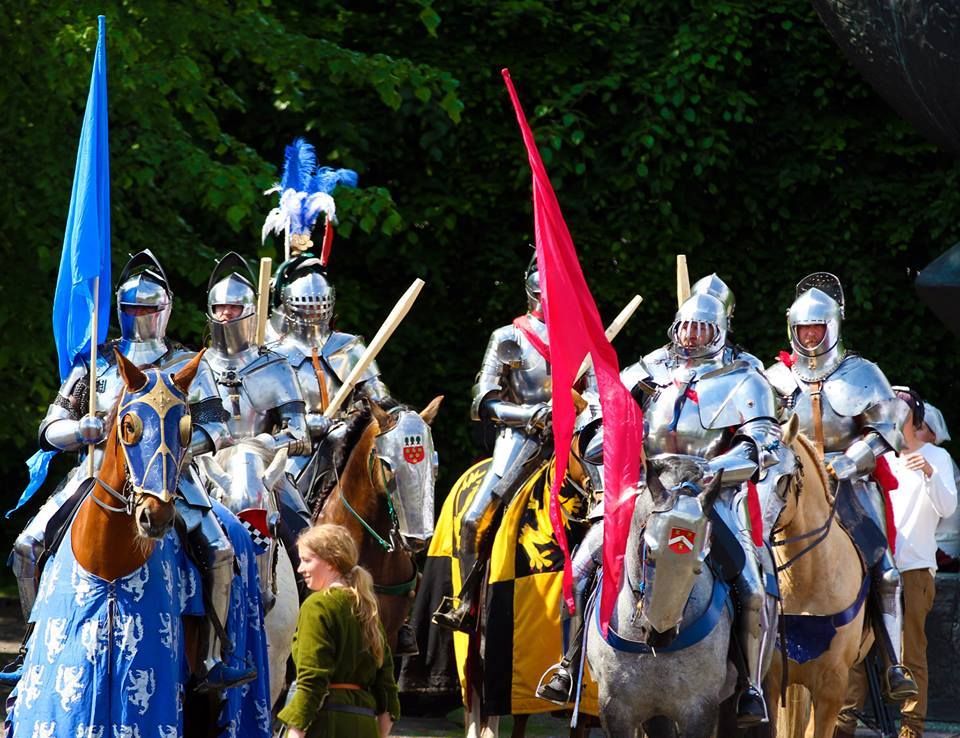
Jousters at the St. Hallvard's Tournament prepare to enter the lists for the mounted melee (photo by Renate Skeie)
Jousters at the St. Hallvard's Tournament prepare to enter the lists for the mounted melee
(photo by Renate Skeie)

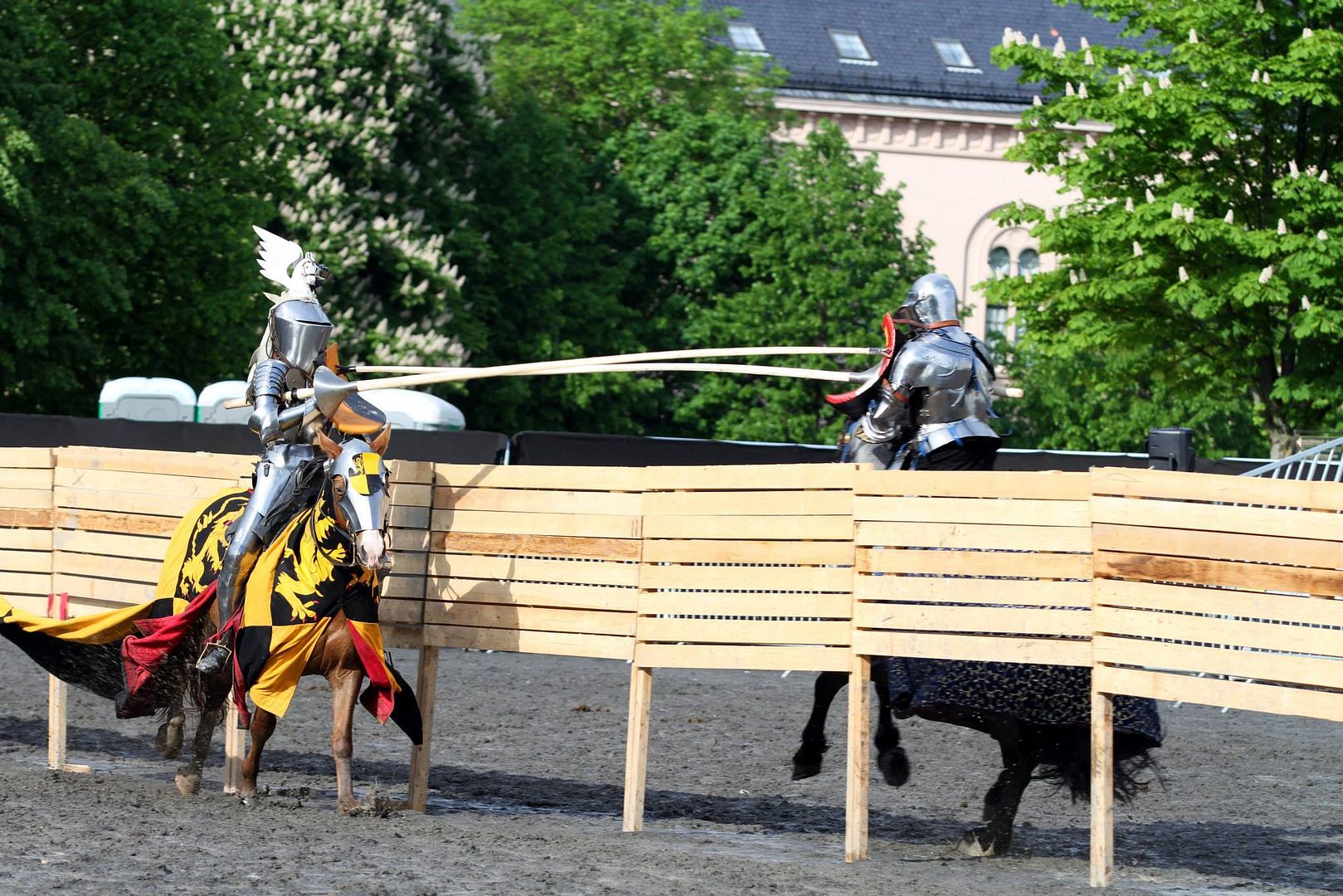
Jouster Joram van Essen, who was born in New Zealand, but lives in the Netherlands, won the tournament championship. Jouster Luke Binks of Australia came in second place overall, and jouster Wouter Nicolai of the Netherlands was named Most Chivalrous.

Luke Binks(left) and Joram van Essen(right) joust at St. Hallvard's Jousting Tournament 2014 in Oslo, Norway(photo by Renate Skeie)

Ben van Koert of Kaos Historical Media (who also happens to be a jouster, though he did not compete in this tournament) created two videos about the event. The first video features the jousters competing in the tournament.


St. Hallvard's Tournament (video by Ben van Koert/Kaos Historical Media)

The second video features behind the scenes footage showing all the work(and the people who do it) that is required to put on a competitive jousting tournament.


Behind the Tournament (video by Ben van Koert/Kaos Historical Media)

Related articles:
Joram van Essen Wins St Hallvard's 2014

The Jousters of St Hallvard's Tournament

Promotional Video for St. Hallvard's Jousting Tournament

Video: Demonstration of Mounted Combat in Armour

Video From Lance Mounted Camera

Photographer Oliver Dunsch: My Day in Sankt Wendel

New Video of The Grand Tournament of Sankt Wendel

Thursday, July 17, 2014

Tobias Frin Talks About the Riding at The Grand Tournament at Schaffhausen

Tobias Frin (whose birthday is today, Happy birthday!) was in Schaffhausen acting as part of the living history displays in association with Die Grossen Ritterspiele zu Schaffhausen and the exhibit of historical jousting equipment at the Museum zu Allerheiligen. He was kind enough to direct me to several videos of the jousting tournament and to offer his commentary on a video featuring one of the mounted melees fought during the course of the event.
"Here is a clip from the Schaffhausen Turnier. Please have a look at the first part. For most people, it seems that the horses are lolloping around tiredly. But it is actually a highly collected canter, sometimes changing into a redopp or terre à terre with gallop pirouettes and such stuff. This is exactly where the academic art of riding comes from, and it is the art of riding that you are seeing!

By the way... What I didn't realize before: The words 'tourney' and 'tournament' come from the French 'tour' which means turning. You can easily see why." – Tobias Frin


Ritterspiele Schaffhausen 2014(video by Felix Walder)

The video shows the last part of a crest melee involving Arne Koets, Petter Ellingsen and Wouter Nicolai, although it looks like Toby Capwell may have been involved in the melee in the bits before the video begins. The melee ends when Arne knocks part of Petter's crest off. The marshal for the melee is Wolfgang Krischke of the Fürstlichen Hofreitschule Bückeburg.


Tobias Frin acting as part of a living history exhibit at the Museum zu Allerheiligen 
(photo by Eliane Caramanna)

More articles about the Grand Tournament at Schaffhausen:
Even More TV News Coverage of The Grand Tournament at Schaffhausen

Toby Capwell's Second Blog Post About the Grand Tournament at Schaffhausen

More TV News Coverage of the Schaffhausen Tournament

Toby Capwell is Writing Blog Posts about the Grand Tournament at Schaffhausen!

TV Coverage of the Grand Tournament of Schaffhausen 2014

Video: Toby Capwell Explains His Passion for Jousting

Promotional Video for Die Grossen Ritterspiele zu Schaffhausen


Friday, July 11, 2014

An Interview with Jan Gradon, Coordinator of the Tournament of King John III at Gniew Castle

Jan Gradon is one of two main organizers (Jarek Struczynski is the other one) for the largest international jousting tournament in Poland, Turniej Króla Jana III Sobieskiego na Zamku w Gniewie. Outside of Poland, the joust is generally referred to as the Tournament of King John III at Gniew Castle. Jan graciously agreed to be interviewed about this year's 23rd annual tournament.
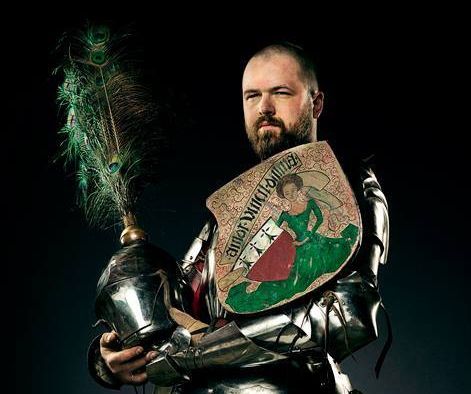

Jan Gradon(photo by Andrzej Wiktor)

Hello Jan, please tell us a little about yourself.

I’ve been involved in historical re-enactment since 1996/7, but at first it was not that "historical". I got more into it around 2001, when I first traveled to England for the Battle of Tewkesbury and other events abroad, and then when I joined the Society of St. Michael Archangel (TaŚMA) in 2004 and my equestrian re-enactment group Xiazeca Druzyna in 2005.

With the group, we portray many periods, from Normans through 13th century knights and Rus warriors, early 15th century with the battle of Tannenberg, mid/late 15th century (we started jousting roughly in 2006/7), 17th century with Polish national cavalrymen and Finninsh Reiters, 2nd Ulhan Regiment of Grand Duchy of Warsaw from the Napoleonic Times to Polish cavalrymen of WWI. We also have a horse archery team within our group, that participates in horse archery contests. In the plans there are Romans too. The group trains due to massive help from our stables Pa-Ta-Taj near Warsaw. They train us also in "normal" riding – dressage, horse jumping, etc.


Jan Gradon, riding Briar, jousts Mark Caple at Arundel International Tournament 2013. In the bottom left is Jan's friend and squire, armourer Tomek Samula(photo by Richard Pearn)

From my past experience, the best equestrian memories I have are: Hastings 2006 where we were riding in Dom Sewell’s conroy, and I was riding his horse George [a 'conroy' is a name for a Norman cavalry troop]; my first international joust in Gniew Castle in 2008; winning of Tournament of the Phoenix 2011, and second place in 2013; Le Tournoi du Lys d'Argent in Canada in 2012 where I was unhorsed; and getting into the final (and losing by 1 point as a team, and receiving 2nd individual score) at Arundel International Tournament last year.

Besides jousting I do skiing in winter and do quite a bit of wargaming and painting miniatures. I enjoy a family life with my wife Ula and two daughters, Marysia and Zosia, and our border collie Gibon.
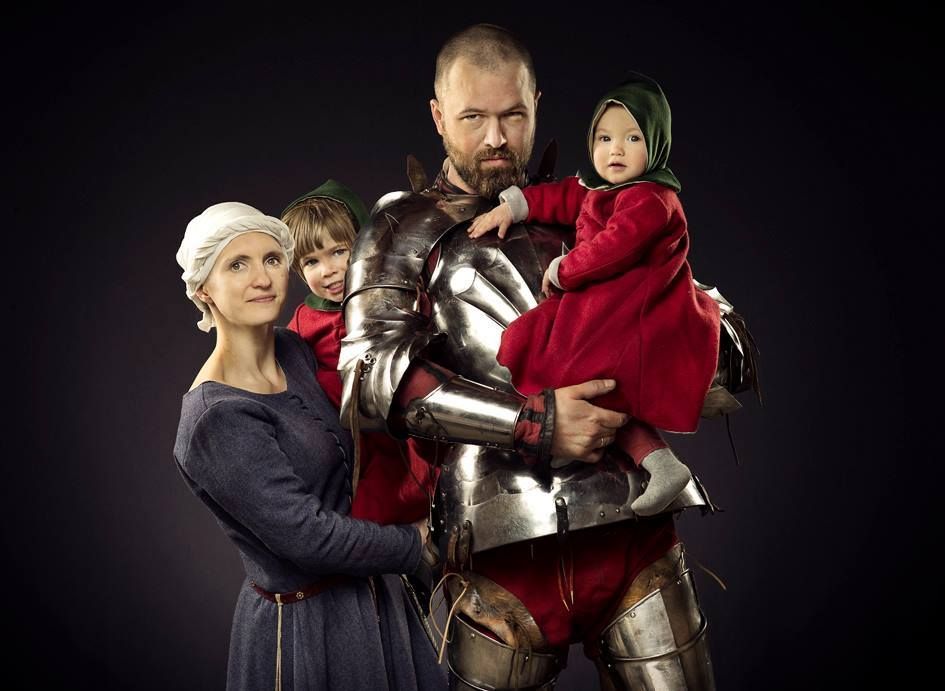

Jan Gradon with his wife Ula and their two daughters(photo by Andrzej Wiktor)

When and how did the Tournament of King John III get started?

The Tournament of King John III started in Gniew Castle in 1992. In 1994 the first mounted tournaments were organized, but at that time they were mainly for a show and only Mounted Skill at Arms contests. Twenty years ago, no one thought of doing jousting, as historical re-enactment was just starting in Poland. In 2007 the first jousting tournament was held, and since then it has grown bigger with higher equipment standards. This year it was the 23rd edition of the event, and the second tournament affiliated with WJT.
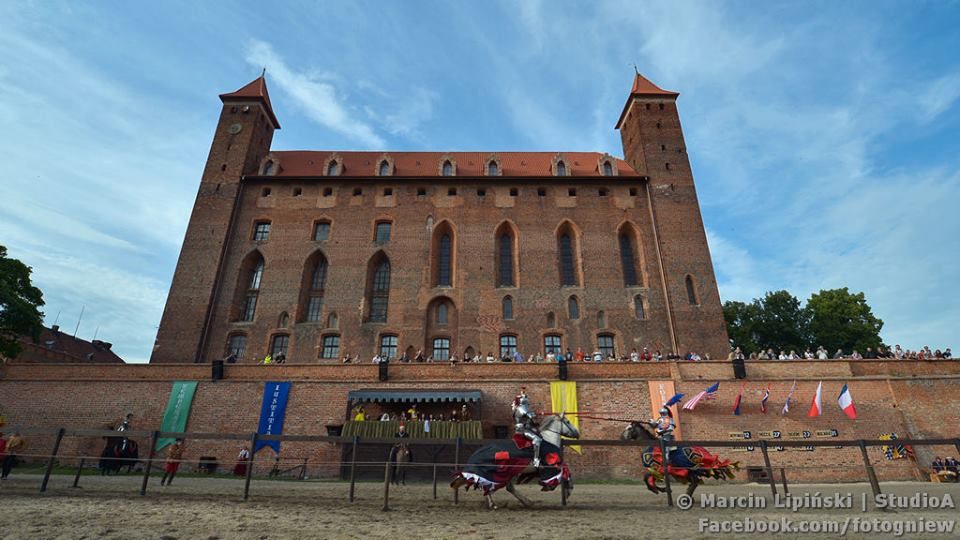

Steve Mallet jousts Jeffrey Hedgecock at Zamek Gniew 2014(photo by StudioA)

What makes Zamek Gniew a good location for a jousting tournament?

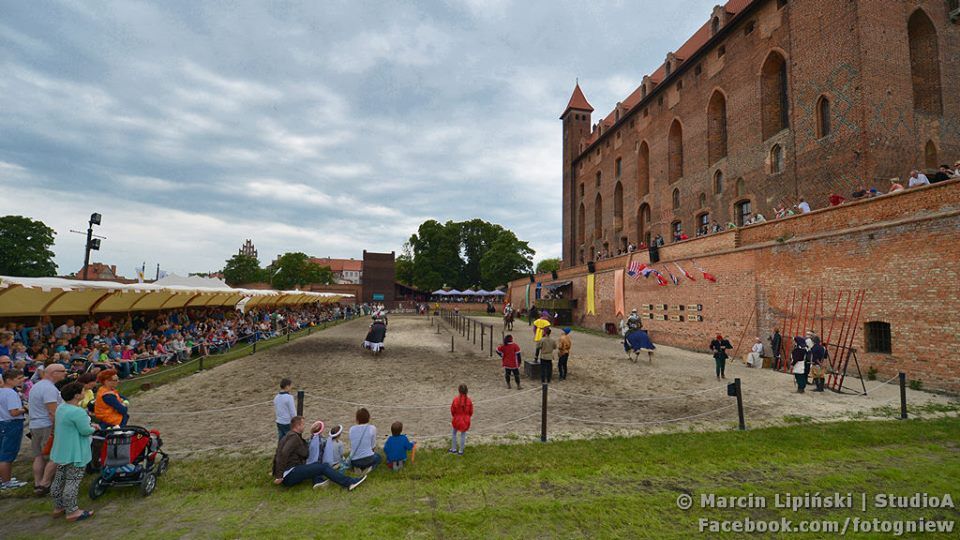
First of all, Zamek Gniew is a real castle, so it is always better to joust on a historical site. Secondly, it is an ideal place to organize an international tournament as it has everything on site: a four star hotel where competitors stay, a restaurant where they are fed, a hotel for all the ground and stable crew, a permanent tilt yard with recently covered stands for the public, permanent stables, armoury for the competitors and a fully equipped party hall to have fun in the evenings.


The tiltyard at Zamek Gniew(photo by StudioA)

Who is allowed/invited to watch the tournament?

The tournament is open for the public, so anyone can come. On Fridays we usually hold training sessions, and they are free to watch. Saturday and Sunday are ticketed, but the prices are not very high, and as far as I know, residents of Gniew have a discount. There was a limited advertising this year, but we had around 2500-2800 spectators.

How did you become involved with organizing this year's tournament?

I was active around the Tournament since 2008 or 2009. Having traveled with Jarek Struczynski to various international events, we saw many things that we could change and include in our tournament. The first tournaments were more in the sport format with competitors in equipment from different periods (i.e. 14th century jousting with 15th century). Having participated in the Tournament of the Phoenix 2011, I came to an idea of organizing a strictly 15th century tournament in a similar format, where competitors have to participate in many contests to get the final prize. I shared that idea with Jarek, who approved it. I divided the work with Jarek. He and his team organized everything on site, preparing the premises, and I must admit they did an enormous job. My part was to organize and arrange everything with the competitors and ground crew.

In 2013, we organized the first tournament affiliated with WorldJoust Tournaments(WJT) and the International Jousting League(IJL) which involved 12 competitors! Unfortunately the weather was terrible, and not everything went smoothly. This year our second WJT tournament was moved in time to the end of June. The weather was perfect, and we were able to run all the contests.
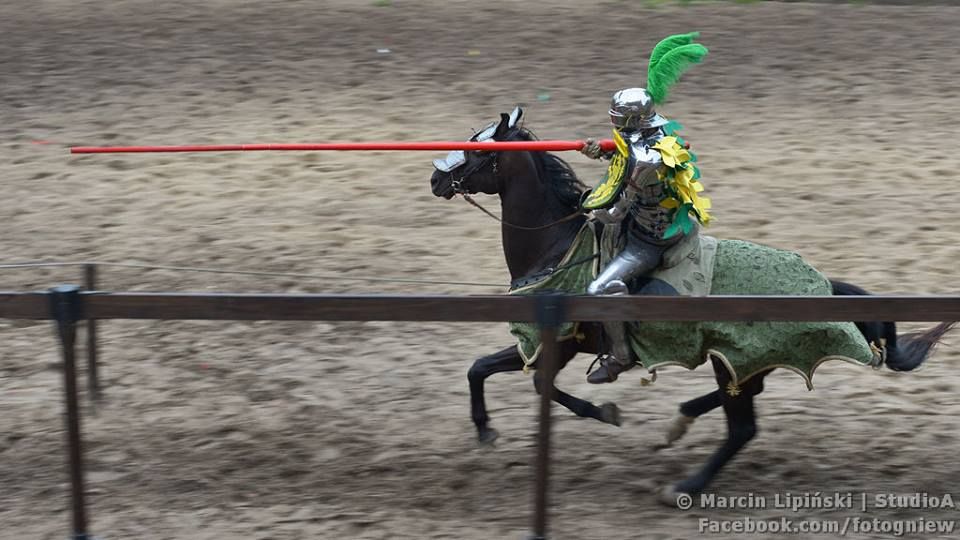

Adam Firyn of Team Poland at Zamek Gniew 2014(photo by StudioA)

How was the tournament organized this year?

This year we ran a team tournament with four international teams:  England with Steve Mallett and Sean George, Norway with Petter Ellingsen and Per Estein Prois-Rohjell, Burgundy with Wouter Nicolai and Jeff Hedgecock, and last but not least, Poland with Michał Ruda and Adam Firyn.

First we held a Mounted Skill at Arms(MSA) competition. This was just for the MSA prize and the scores were not counted towards the team score. The MSA was won by Steve Mallett from team England.

For the Team prize, we were to count scores from Jousting (overall 6 sessions), mounted melee and crossbow. However, because the competitors did not have a chance to practice the crossbow before the contest, in the end we made it an individual competition that did not count towards the overall score.

As for jousting, we had each of the teams jousting with all the other teams. In each session, one team was jousting with another, and each competitor was to make 3 passes with each competitor from the other team. The scores were counted depending on the area hit (shield, armour), and breakage (attaint, full break). The Lady of Honour and the other Ladies could add 1 or 2 extra points to a total score of a team or individual if they liked his riding, behavior etc...
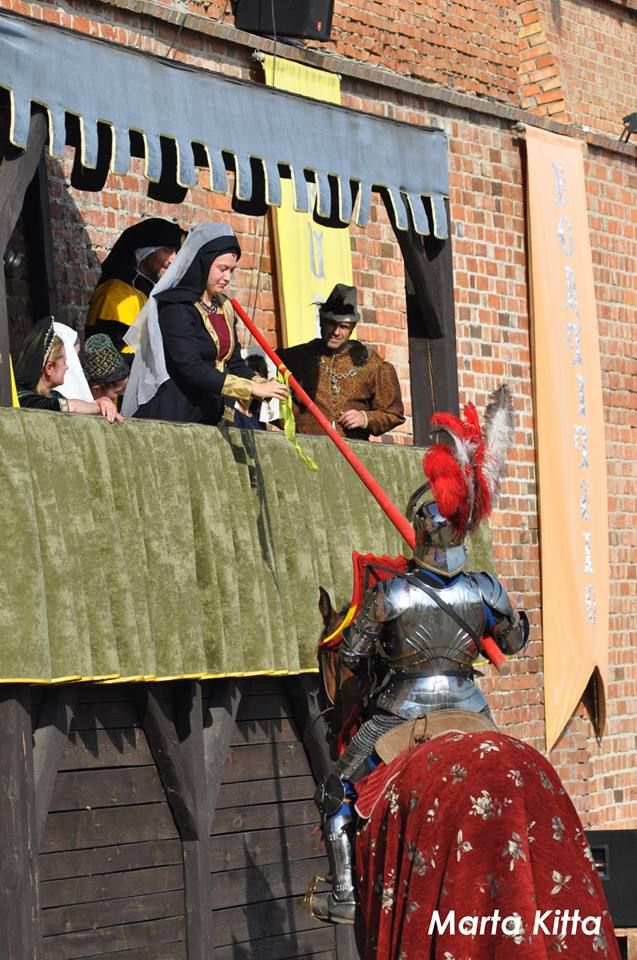

Lady of Honour Viktoriya Borisova wraps a token around the lance of Michel Ruda
(photo by Marta Kitta)

The mounted melee was watched by the Marshall, Knight of Mercy and Court of Ladies, and scores were applied under their opinion. In the end, all scores were put together, and England became the Team winner, Petter Ellingsen earned the Individual title, and Michał Ruda won the crossbow competition.

What can you tell me about the horses that were ridden in the tournament?

All the horses this year were provided by the Castle crew and Krystian Mróz, who was the Stable Master. They were various breeds, from Trakehner, Silesian, Polish Halfbred, and Shire cross breeds.

What were some of the most exciting/interesting moments during the tournament?

There were a lot of good, and strong hits. Quite a few lances broke in their solid parts. I must say that I cannot choose one exciting moment, as I’m very happy with the event as a whole.
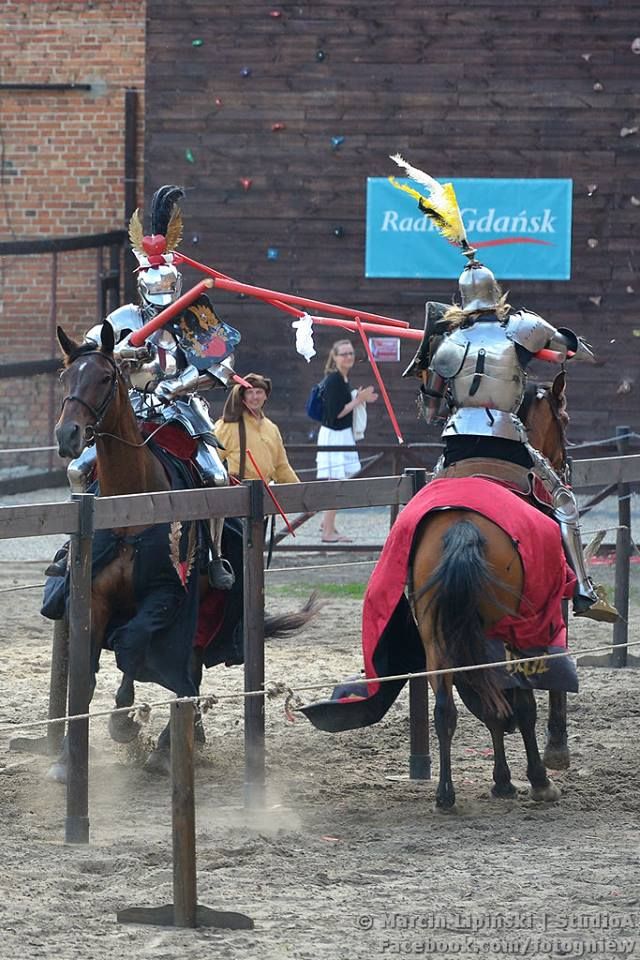

Sean George breaks the base of his lance against Wouter Nicolai(photo by StudioA)

Did anything exciting/interesting happen before or after the tournament?

On Thursday prior the event, we had a nice party during the day with a few drinks and laughs, and then Jarek Struczynski ordered us to mount up. Steve Mallett, Jeff Hedgecock, Sean George, as well as the Gniew team and I were dressed in 17th century Polish costumes, and we went for a ride onto the fields and forests on the banks of the Vistula River. Everything began calmly, and then Jarek ordered a flat out gallop. I hope this will be well remembered.

On Friday we had an excursion to Marienburg Castle – the capital of the Teutonic Order, which in my opinion is one of the most beautiful castles in Europe.

We also held a bareback melee, where we rode just in pants with no saddles, and were fighting with softer maces, and grappling was allowed. It did hurt a bit, but it was fun!
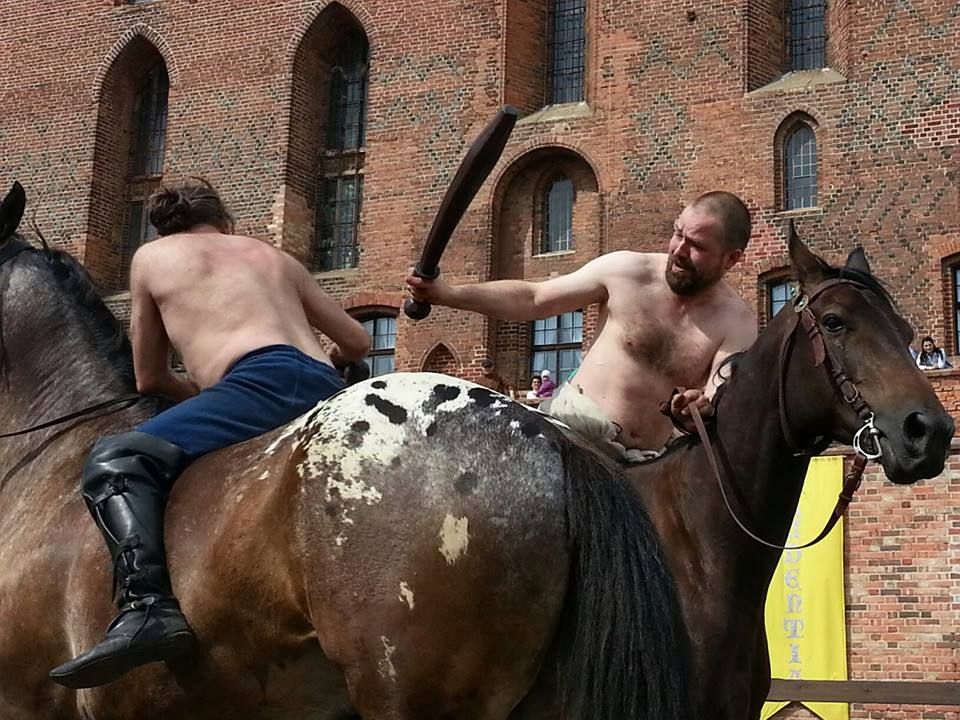

Luc Petillot(left) and Jan Gradon(right) compete in the bareback melee
(photo by Martin Hagen Johnsen)

After the Tournament, we also had a Mass with a Gregorian choir in the Castle’s chapel.

What can you tell me about the night jousting that took place by torchlight this year?
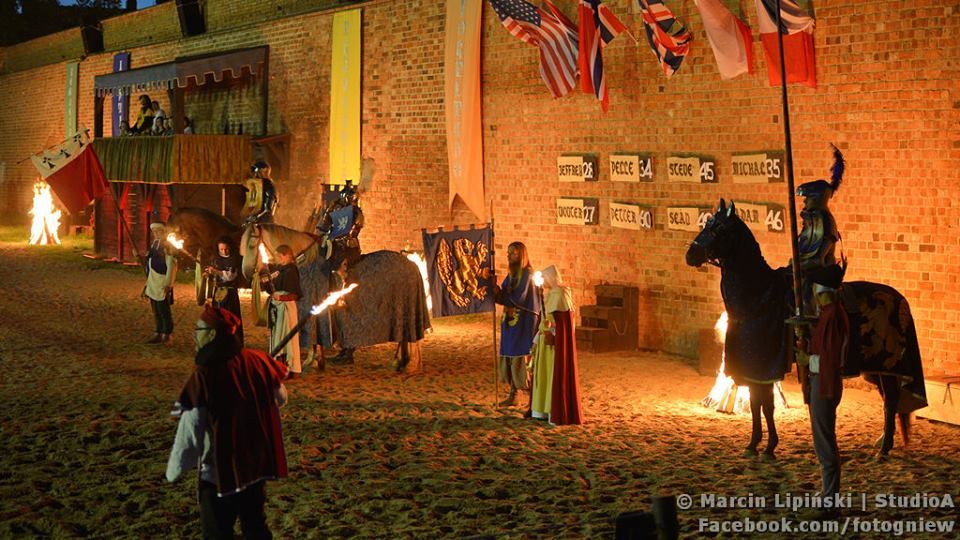

Jan Gradon, Luc Petillot and Adam Ałaszewski await the beginning of the Tournament of the Golden Rose(photo by StudioA)

It was not a part of the competition. We organize it annually as the Tournament of the Golden Rose. There is a local legend about a Golden Rose and its Protector. In the tournament, knights joust to get the Golden Rose, and the winner has to duel the Protector. This year we had Luc Petillot (Knight of Mercy during the day competition), Adam Ałaszewski from Gniew, and me as the knights, and Jarek Struczynski as the Protector of Golden Rose. It was a show, but the jousting was real. All done with bonfires, torches and nice music. I was very happy to do it, as I could try my new armour before this season (btw, huge thanks to Pelle for letting me use his helmet).
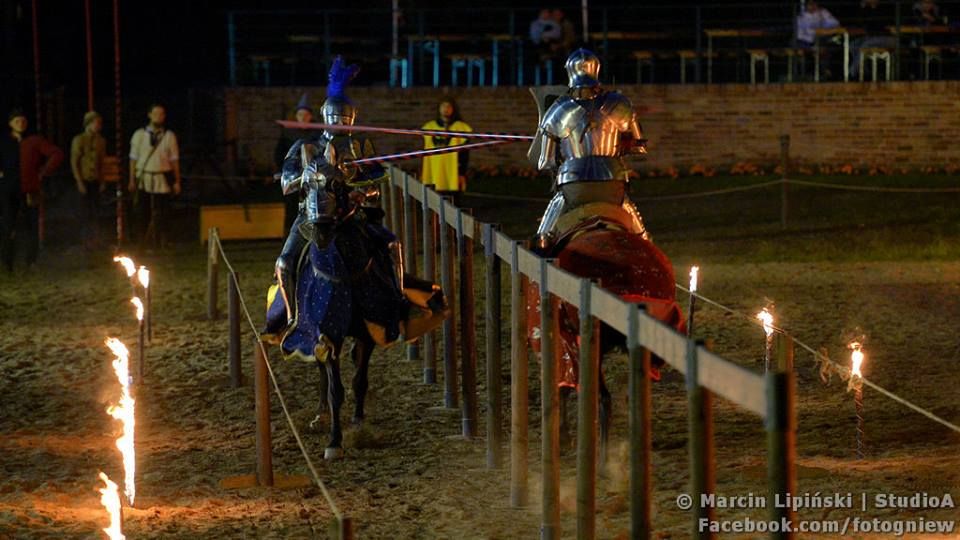

Adam Alaszewski and Jan Gradon joust during the Tournament of the Golden Rose
(photo by StudioA)

What is unique about the Tournament of King John III?

As I said to the Competitors during the briefing on Friday evening, the Tournament is mainly a social event, where people from different countries and cultures can meet, talk, have fun and break some lances. Jousting is a crucial part of the event, but it is very important to have fun. We definitely had fun… especially on Saturday night!

How does the tournament vary each year? What are some of the ways the tournament was organized in previous years?

We change the format annually. In the past it was mostly a foot combat. Then when the jousting started, we change from individual, to team, change the rules, etc..., but the spirit stays the same.

What would you like to say about/to this year's participants?

This year we had some Competitors that participated in the past (Jeff, Steve, Petter, Michal and Adam), and two new ones – Sean and Pelle.
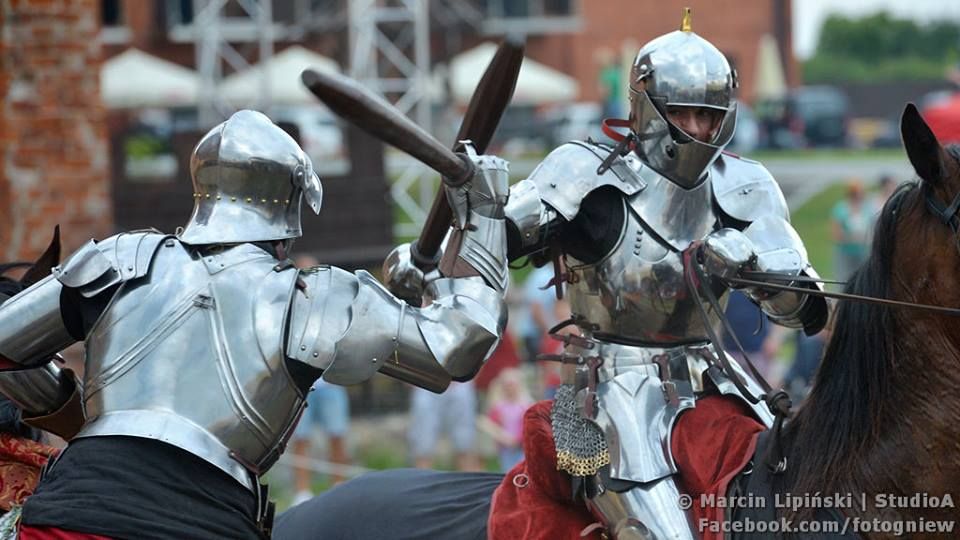

Per Estein Prois Rohjell(aka Pelle) and Sean George exchange blows in the mounted melee 
during their first competition at Gniew Castle(photo by StudioA)

The crew was Viktoriya Borisova as the Lady of Honour; Luc Petillot as Knight of Mercy; Jarek Struczynski as Field Coordinator; Stanislaw Szmit as the Herald; Krystian Mróz as Stable/Horse Master; Jakub Grybek, Leszek Struczyński, Darek Ostaszewski, Paweł Piotrowski as scoring judges; squires from Chełmno and Gniew; and me as the Marshal.
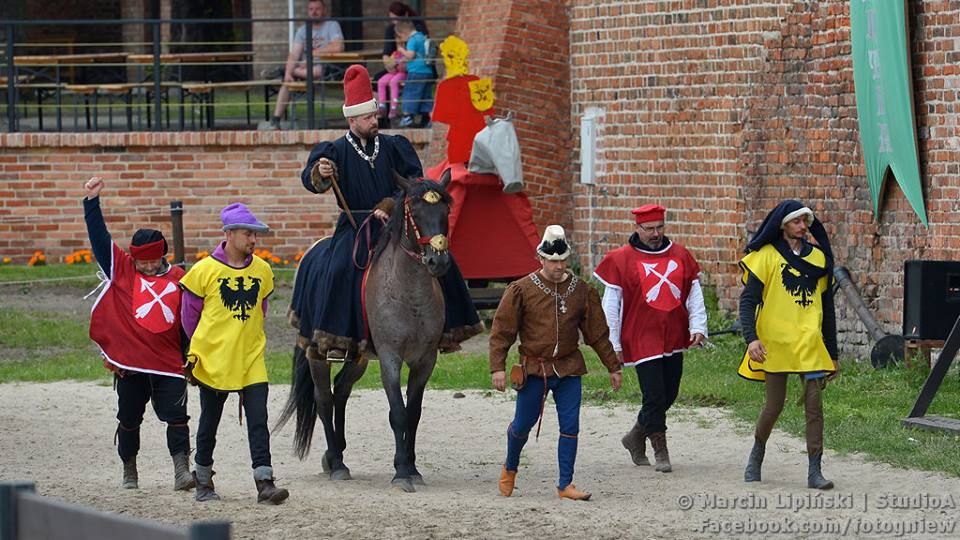

Jan Gradon(mounted) with other members of the ground crew for the tournament
(photo by StudioA)

What are your hopes/plans for future tournaments at Zamek Gniew?

We will talk about it after this season ends. Next is Arundel International Tournament, where Jarek Struczynski and I will joust as team Kingdom of Poland! Wish us luck!

Best of luck at Arundel and in all your future jousts!
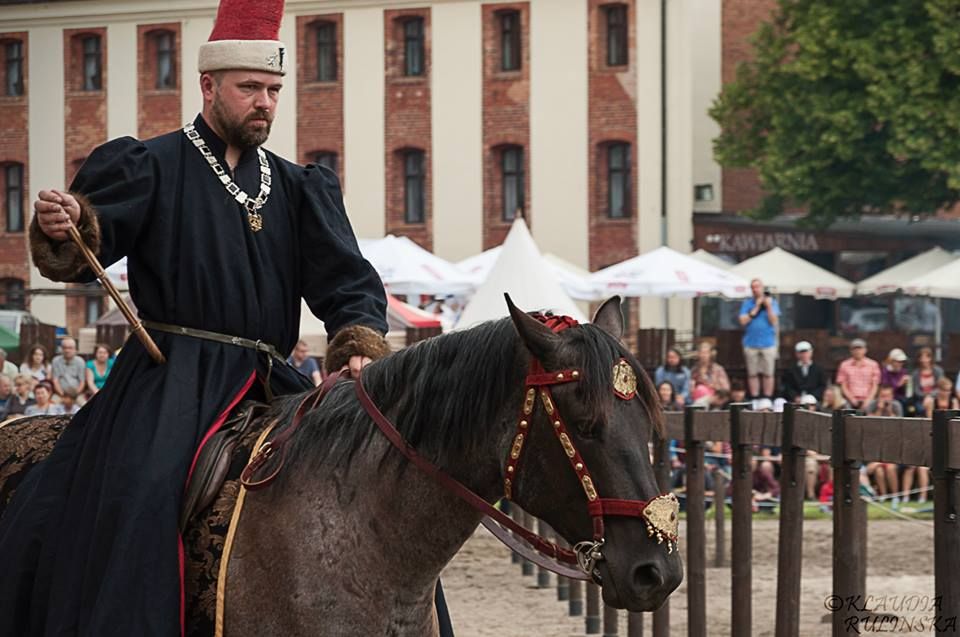

Jan Gradon, holding his Marshal's baton watches the joust at Zamek Gniew intently
(photo by Klaudia Rulinska)

Related articles:
Jarek Struczynski Wins the "Tournament of the Phoenix 2013"

Arundel Castle International Jousting Tournament 2013

An Interview with Jouster Mark Caple, Champion of the "Queen's Jubilee Horn Tournament 2014"

Thursday, June 19, 2014

Wouter Nicolai Describes His Experiences Doing a 'Joust at Large'

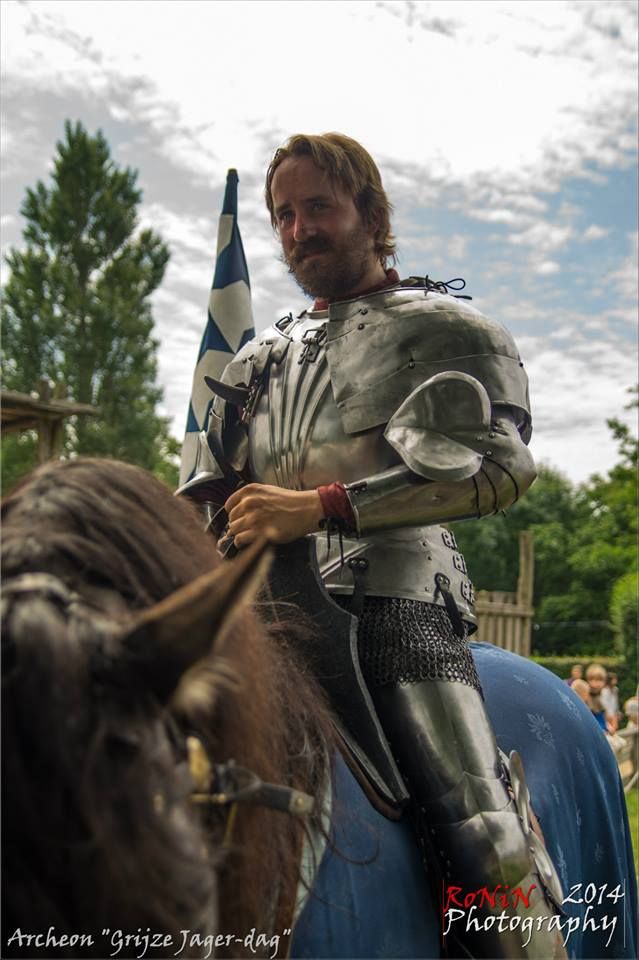
On June 8, 2014, at the Archeon History Museum in the Netherlands, jousters Wouter Nicolai and Bertus Brokamp of Stichting HEI did a demonstration of a 'joust at large' -- a joust without a tilt. Jousting without a tilt is dangerous, even for experienced jousters(though much practice reduces the danger). Wouter Nicolai has been chosen as Most Chivalrous in several of the tournaments he has competed in, including the recent St Hallvard's Tournament 2014 and the Tournament of the Phoenix 2013. I asked Wouter to write something about his experiences doing the joust at large, and he kindly sent me the following text. Photographers Hans Splinter and Ronin Photography were kind enough to allow me to use their photographs to illustrate the text.

Written by Wouter Nicolai:

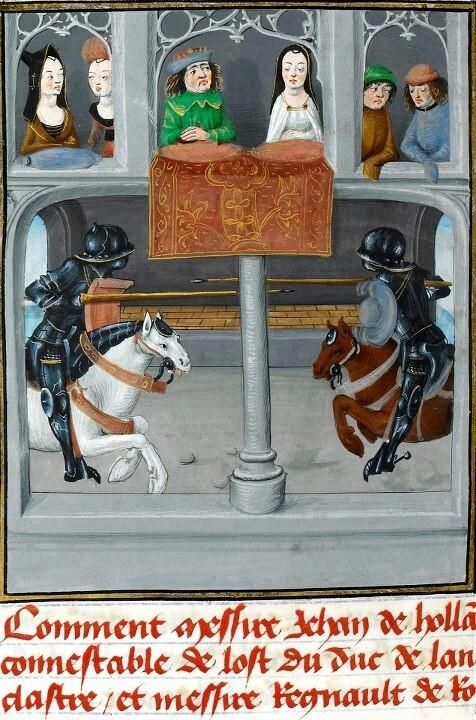
The joust at large is one of the tournament forms we have been talking about for a long time, but one that we had never actually tried. The joust at large (or “at random”) is a jousting form done without a tilt, usually followed directly by a melee with the sword. It was done in field armour, using sharp lances and, in most cases, shields.


A joust without a tilt between Sir John Holland and Regnault de Roye, from Jean de Wavrin, Les Choniques d' Angleterre (image provided by Wouter Nicolai)

To me the joust at large is fascinating, because of its simple and straightforward approach. Despite the dangers of the joust itself, this could be done on almost every field with little preparation (of the list). It also seems a very feasible way of organising a small joust by a local squire or knight in the 15th century. We have chosen to present this joust as a pas d'armes because the concept of a challenger and a defendant resonates with the audience, and it is a good format to convey a very real historical context for jousting, needing no more than a small crew and two riders.

Bertus and I have been doing historic jousting demonstrations for years, mainly in the open air museum Archeon in the Netherlands, in these demonstrations we show skill at arms with sword and lance, jousting and melee. Our experience in working together has given us a good starting point for developing this new demonstration of a joust without tilt.


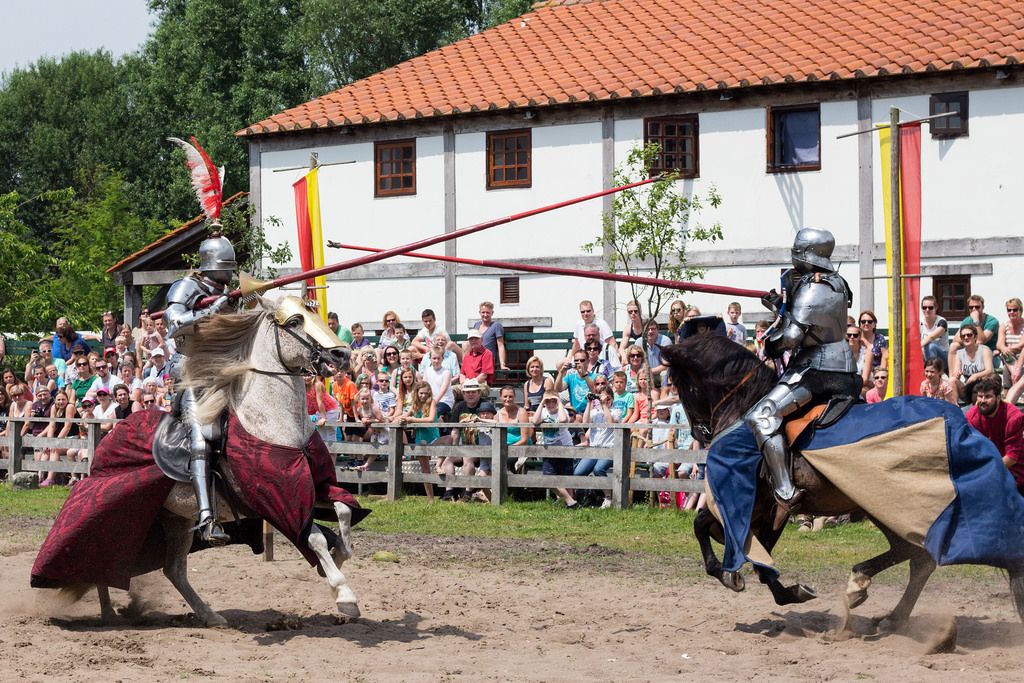
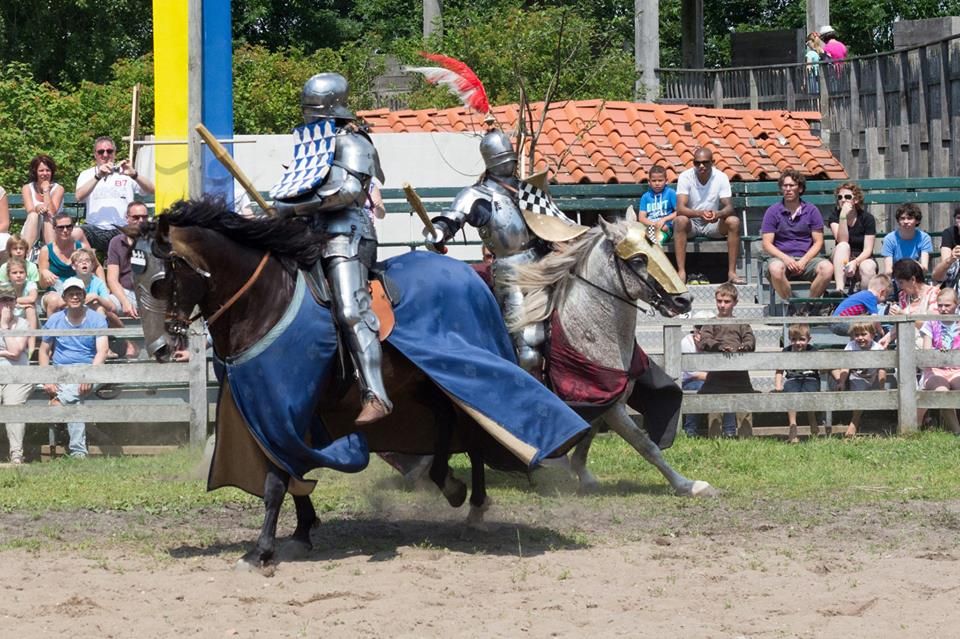
Wouter Nicolai(left) jousts Bertus Brokamp(right) at Archeon 2014(photo by Hans Splinter)

Our demonstration has three parts: First, we start with the challenge to introduce the concept of a pas d' armes to the audience and explain how and why such tournaments were done. The challenge starts with the defendant declaring the pas, and the challenger declaring the challenge. Second, we do the skill at arms with runs on the quintain, as the lance is a knight's primary weapon. In our try-out show, this was a simple shield on a stick, so we could easily remove it before the joust.


Wouter Nicolai strikes the quintain(photo by Hans Splinter)

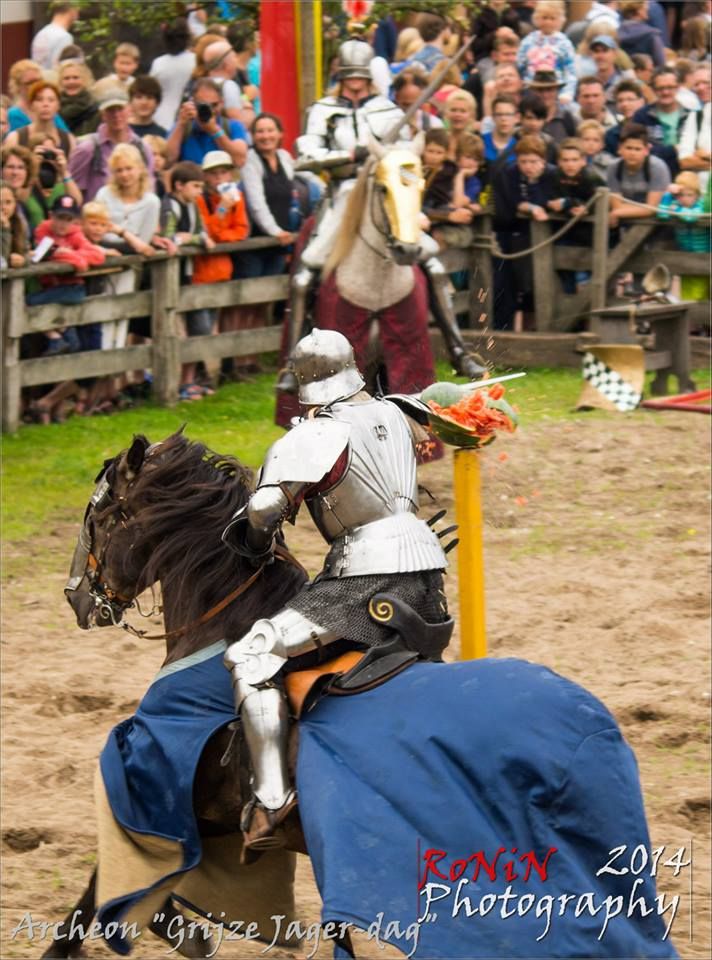
The next part is with the sword, where the rider encircles cabbages or watermelons and shows different sword techniques. Third, we do the joust itself in two rounds. Both rounds starting with the lance and moving on with a melee weapon (sword or club). We keep fighting until one rider surrenders.


Bertus Brokamp slices a watermelon with his sword(photo by Ronin Photography)

How we do the joust:
Although most if not all readers will understand how dangerous jousting without a tilt can be, I do want to emphasise:  Don't go and casually try a joust at large, it is very dangerous! We have spent a lot of time and effort on proper training before we considered ourselves ready for this challenge.

In a way the runs of joust at large are no different from a charge in the melee, but there are some other factors that play a role in doing a successful pass. The angle in which you approach the opponent is more critical with the lance, especially when using an arret. In general there is less room to manoeuvre due to the length and off-balance of the lance.

In the runs, I try to keep the horse in a slow canter and only speed up when I am certain I am in range and not in risk of getting too close. Adjustment of the distance to the opponent happens by sideways incline, not by changing the direction of the run.

For the first joust, we positioned two cabbage-cutting posts in the track of the run to use as a guide. This did not work because a run without tilt is done differently than on a tilt. Without a tilt, we are constantly adjusting our position sideways, which clearly does not align to a straight track. Once we moved the posts we got much closer, but only close enough to score a few attaints.


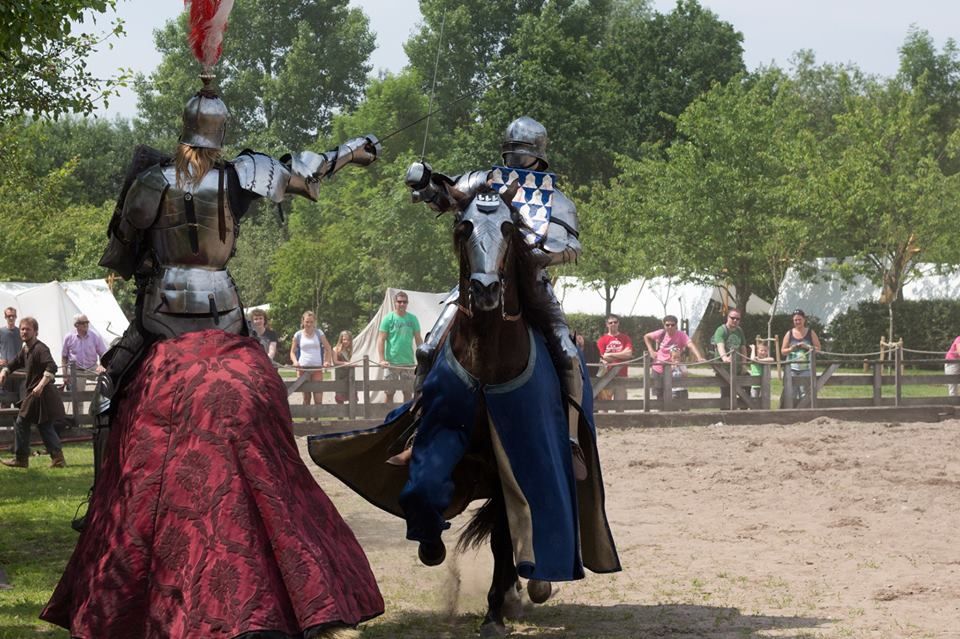
Wouter Nicolai(left) and Bertus Brokamp(right) joust without a tilt at Archeon 2014 
(photo by Hans Splinter)

The equipment:
The lances we use for the joust at large are a bit lighter than the lances we normally use. We use poplar inserts, which behave a bit more like real lances than balsa inserts. They are harder to break, and more important (for the audience) is that they make more noise when they hit. The downside of the poplar insert is that if you cannot get close enough you cannot break. We decided that the more realistic sound of an impact was more important than easy breaking.

The first round of melee is done with blunt swords. The sword melee is fought in a more technical way than the club melee, because fighting with swords on horseback is more dangerous and very destructive to armours. The swords are similar to what re-enactors use, although I use a sword which was specifically designed to use in the mounted melee. It has a thicker and more rounded cutting edge (5mm) and is shaped like the swords drawn in Rene d' Anjou's tournament book.


Wouter Nicolai(red)and Bertus Brokamp(blue) fight with swords on horseback
(photo by Hans Splinter)

The clubs are made from a hard rubber, although we will probably use wooden clubs for future demonstrations. They allow us to fight in a more violent way, with less risk of injuring our opponent.

The joust and melee are done in field armours and helmet. We do not have time to change helmets or visors between the joust and melee. The visors of the sallets are locked down with a bolt, to make sure they will not open on the impact of a weapon.


Bertus Brokamp(left) and Wouter Nicolai(right) fight with clubs during a mounted melee
(photo by Hans Splinter)

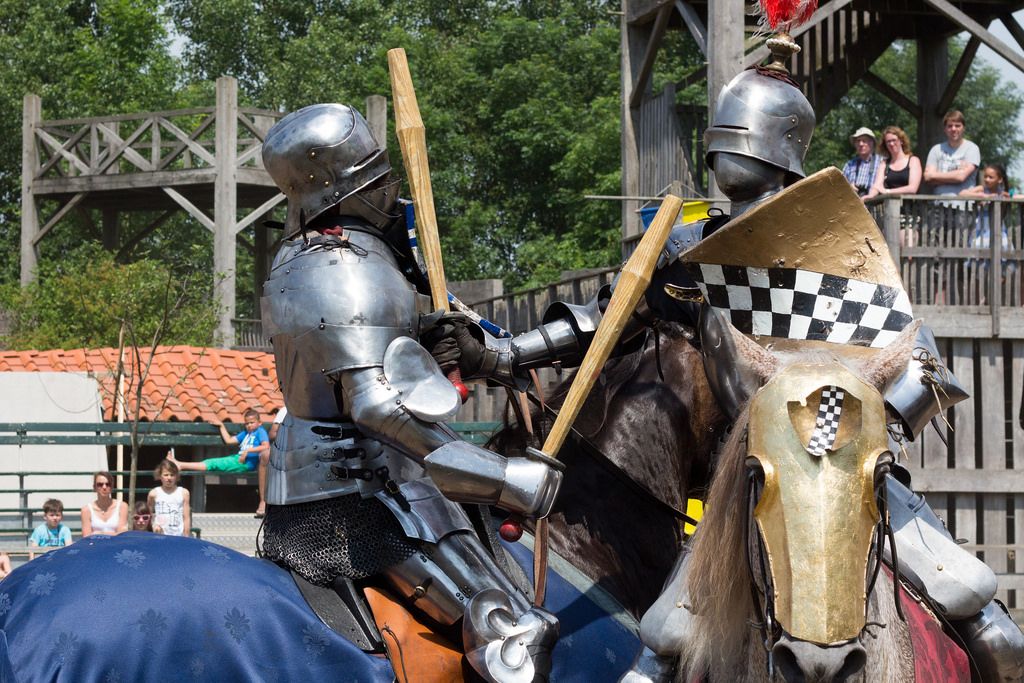
The shield for this kind of tournament, should be a single curved one, rather than the saddle curve shields we use for the shaped solid lances (i.e. joust of peace). The shield is intended to catch the lance rather than to deflect it. In the photos I am using the saddle curve shield, this was because my war shield was not yet ready to use. It is not an appropriate shield for this style of jousting.


Bertus Brokamp(left) and Wouter Nicolai(right) continue to wear their shields during the melee. Bertus' shield (blue and white) has a single concave curve around a horizontal axis, the correct style of shield for the joust at large. Wouter's shield (gold, black & white) is a saddle curve shield, it curves concavely around a horizontal axis and also curves convexly away from a vertical axis which goes down the center of the shield(like the prow of a ship). This type of shield is not ideal for the joust at large (photo by Hans Splinter)

A last bit of equipment we use to add more safety and historical accuracy is the arret d'cuiras(lance rest). A properly used arret has some advantages. First of all it forces a rider to use a proper historic technique in handling his lance, which is a vertical drop and a precise method of couching it. This keeps the lance tip in the air and out of the way. It also stabilizes the lance during the run, which helps the rider to focus more of his attention to riding his horse.


You can see the arret(lance rest) on the right side(his right) of Bertus Brokamp's armour
(photo by Ronin Photography)

Our joust at large demonstration will once again be done at the Gebroeders van Limburg Festival in Nijmegen (the Netherlands), August 30-31, 2014, and next year in the open air museum Archeon (the Netherlands), May 24-25, 2015.


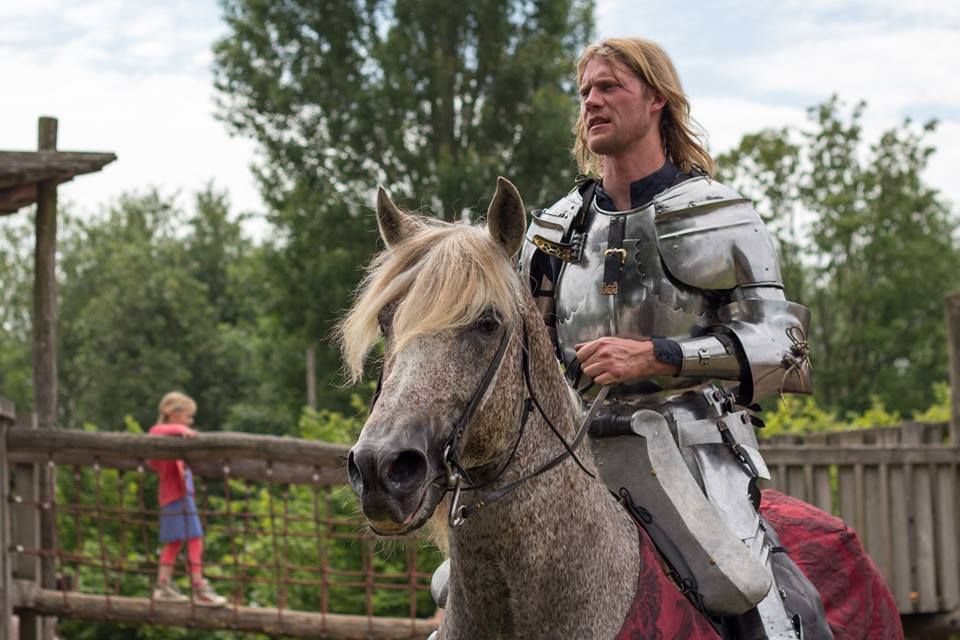
Wouter Nicolai on his Andalusian stallion Flamenco(photo by Hans Splinter)

Related articles:
Joust for Fun: A Knight and his Axe

The Jousters of St Hallvard's Tournament

Jarek Struczynski Wins the "Tournament of the Phoenix 2013"

Tuesday, June 10, 2014

Joram van Essen Wins St Hallvard's 2014

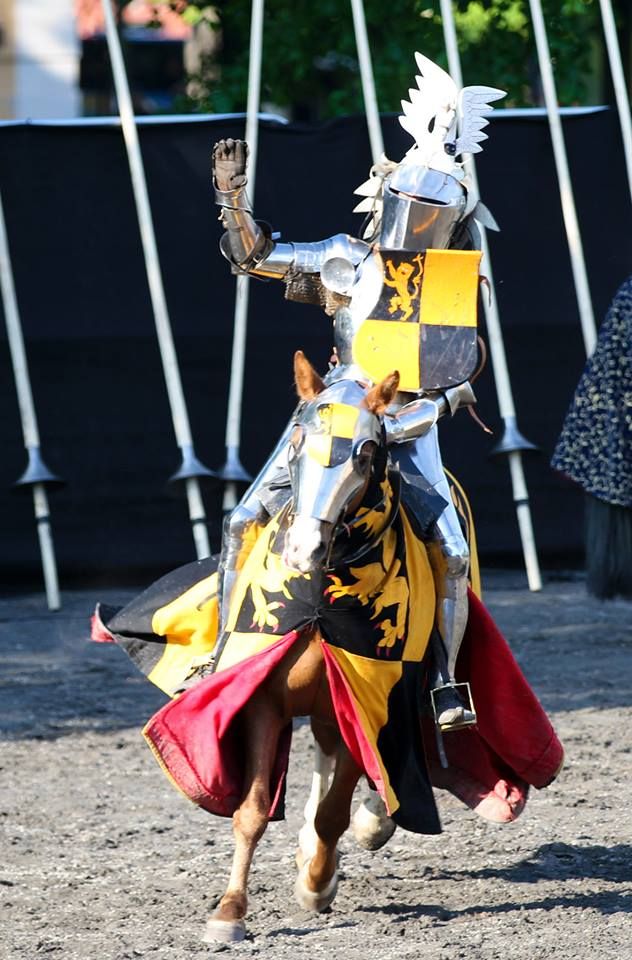
St Hallvard's Tournament, an international jousting competition, took place May 23 - 25, at the historic Akershus Fortress in Oslo, Norway. Ten jousters from three different countries participated in the competition, which included two sessions of jousting and two mounted melees each day. Joram van Essen, who was born in New Zealand, but who currently resides in the Netherlands, won both the jousting competition and the mounted melee competition, and therefore, he earned the title of tournament champion. Joram also won the Grand Tournament of Sankt Wendel in 2012. In both tournaments he was riding his trusty steed Zogo, a beautiful Murgese stallion.

Joram van Essen on his Murgese stallion Zogo(photo by Renate Skeie)

Luke Binks of Australia earned second place overall. He was riding a Norwegian warmblood gelding named Misty, who was born, bred and trained at Trollspeilet, the riding and training center run by jouster Per Estein Prøis-Røhjell and his wife Hanne.

Luke Binks on the Norwegian Warmblood Misty(photo by Renate Skeie)

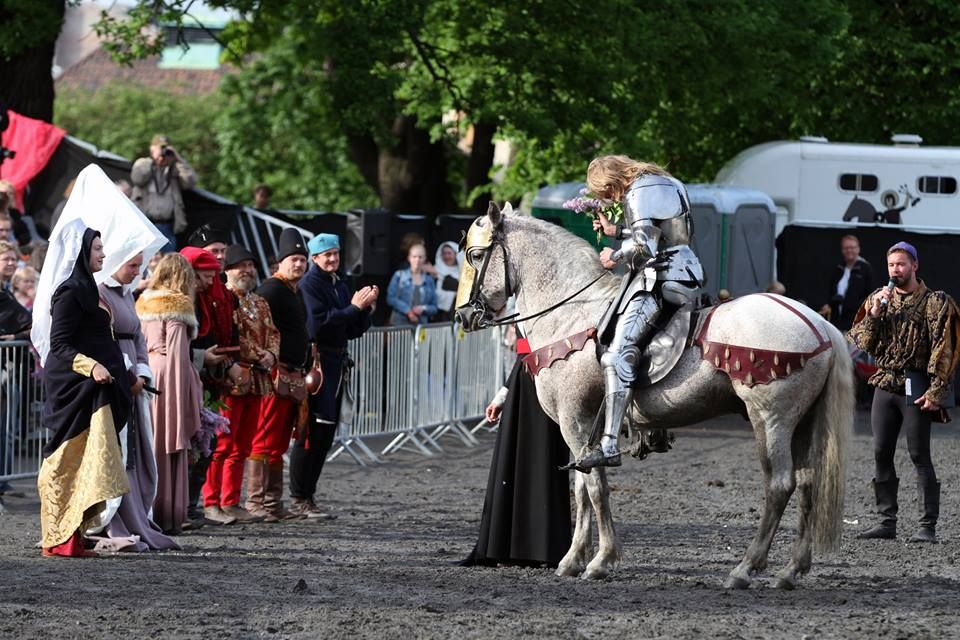
And Wouter Nicolai of the Netherlands, riding his Andalusian stallion Flamenco, was chosen by the Ladies as Most Chivalrous. Wouter was also chosen to win the Chivalry Award at the 2013 Tournament of the Phoenix.

Wouter Nicolai humbly bows his head as he accepts the Award for Chivalry at  St. Hallvard's Jousting Tournament 2014 (photo by Renate Skeie)
Wouter Nicolai humbly bows his head as he accepts the Award for Chivalry at 
St. Hallvard's Jousting Tournament 2014 (photo by Renate Skeie)

More details about the tournament will be coming soon.

Related Articles:
An Interview with Joram van Essen: Grand Champion of "The Grand Tournament in Sankt Wendel"

Teaser for the Upcoming Video of the St Hallvard's Tournament

The Jousters of St Hallvard's Tournament

Promotional Video for St. Hallvard's Jousting Tournament

Random Pic: Practicing for St Hallvard's

Wednesday, May 21, 2014

The Jousters of St Hallvard's Tournament

St Hallvard's Tournament will be taking place this weekend, May 23 - 25, on the grounds of the historic Akershus Fortress in Oslo, Norway. It was organized by Petter Ellingsen of the jousting troupe Ridderhest and will be a featured part of the Oslo Middelalder Festival. The participants will compete in both the mounted melee and the joust. The jousting will be done with tapered solid lances with steel coronels, like those used in the Grand Tournament of Sankt Wendel. This means that the skill and armour requirements for the jousters are higher than at many other tournaments.

There will be ten jousters from three different countries competing for the championship of the tournament.

Alix van Zijl of the Netherlands

Alix van Zijl on Torero(photo by Katla Menada)

Alix van Zijl is a veterinarian who runs a practice employing four other vets. She's been riding horses since childhood and has competed in dressage. In 2003, she began training in historical riding with Joram van Essen and Arne Koets. In 2009, she ordered a custom made museum quality Milanese Armour, and in 2010, she competed in her first public joust. She is currently a board member of the historical riding group Stichting HEI. She fought in the mounted melee at the Grand Tournament of Sankt Wendel in 2012, and became the first woman in Europe to compete in a joust using tapered solid lances with steel coronels during the White Bear Tournament in Nyborg, Denmark in 2013. Alix rides her own Andalusian stallion, Torero. She bought him in Spain when he was four years old and has trained him herself according to the baroque principles taught at the Hofreitschule in Buckeburg, Germany.

Andrew McKinnon of Australia

Andrew McKinnon(photo from Arundel International Tournament)

Andrew McKinnon had never ridden a horse before turning 40. Yet when he discovered that real jousting still exists, he began training with Rod Walker and less than three years later competed in his first joust. Since then Andrew has competed successfully in jousts in Australia, New Zealand and France. He first competed with tapered solid lances at the Blacktown Medieval Faire in Sydney, Australia. Andrew is currently organizing the Tournament of St Ives which will take place in northern Sydney in 2014, and will feature jousting with tapered solid lances. Andrew's armour is an Italian spring steel harness circa 1460-1470 made by fellow Australian jouster Luke Binks. When not jousting, Andrew works on developing his dressage skills and playing the blues. He also owns a communications company with his wife Andrea, and has three strapping sons.

Arne Koets of the Netherlands

Arne Koets on Maximillian(photo by IsisSturtewagen/Stichting HEI)

Though of Norwegian descent, Arne Koets currently lives in Germany. He has been interested in military history for as long as he can remember and is one of the founding members of Stichting HEI. He began riding in 2001 and participated in his first joust in 2002. He has since participated in over 750 jousts in fifteen countries on three separate continents. In 2010, he won the Ironfest Joust, the first international jousting tournament to use solid tapered lances with steel coronels in modern times. In 2012, he organized and competed in the Grand Tournament of Sankt Wendel. When not jousting, he studies and teaches the historical dressage necessary for mounted combat.

Bertus Brokamp of the Netherlands

Bertus Brokamp(photo by Isis Sturtewagen/Stichting HEI)

Bertus first became involved in medieval martial arts in 2001. He later joined forces with Stichting HEI and began learning how to ride in 2004. He started out working as ground crew for the mounted members of the group, then in 2007, he participated in his first joust and also became a member of the board. That same year he received his Master of Science degree by writing a thesis on landweren, the late medieval defense lines in the Netherlands and Holy Roman Empire. In 2011, Bertus became the proud owner of the Andalusian stallion, Talento. After some intensive training, Talento was ridden by Wouter Nicolai in the Grand Tournament of Sankt Wendel in 2012. Since then, Talento has continued to carry jousters into the tilt and has been trained in classical dressage. Bertus broke his first tapered solid lance in 2013, during the White Bear Tournament in Nyborg, Denmark.

Ivar Mauritz-Hansen of Norway

Ivar Mauritz-Hansen(photo by Renate Skeie)

Ivar has participated in many demonstrations and competitions in Norway and northern Europe, both on foot and on horseback. He started out training in Olympic style fencing when he was nine years old. Through the years since, he has learned to fight with the epee, longsword and pole axe on the ground, and now competes with a lance on horseback. He began riding in 2006 and broke his first lance in 2008.

Joram van Essen of the Netherlands

Joram van Essen at the Times & Epochs joust in Russia(photo by Andrew Boykov)

Joram van Essen was born in New Zealand, but moved to the Netherlands in 1999 to pursue his passion for historical european martial and equestrian arts. He was a founding member of Stichting HEI which was started in 2000 to promote historical education and authentic historical re-creation in the Netherlands. He has competed in numerous jousts around the world, including the prestigious international jousts at the Royal Armouries in Leeds, England, at the Times & Epochs international joust in Moscow, Russia and at Nyborg Slott in Denmark. In 2012, he was tournament champion of the Grand Tournament of Sankt Wendel, considered one of the most historically accurate jousts of modern times. Joram’s philosophy is that jousting is an Art, which requires training, dedication and team work between horse and rider.

Luke Binks of Australia

Luke Binks at Blacktown Medieval Faire(photo by Garry Davenport)

Luke Binks has had a lifelong passion for knights and the chivalric culture of the middle ages. Not satisfied with what he could learn from books, in 2002, Luke began making armour, learning to fight and to ride horses. The following year, Luke competed in his first international joust. Since that time, Luke has competed in jousts in aproximately a dozen countries around the world, including tournaments in Australia, Europe and North America. He has also spent time living and working on all three of the above mentioned continents, in search of like minded people, the ultimate pass with a lance and the skilled clash of a sword.

Per Estein Prøis-Røhjell of Norway

Per Estein Prøis-Røhjell at Tonsberg Medieval Festival 2013(photo by Espen WinPics)

Per Estein Prøis-Røhjell, aka Pelle, owns and runs Trollspeilet with his wife Hanne. Trollspeilet is a company which offers riding instruction all over Norway and further abroad. Hanne also writes a blog about their work. Pelle and Hanne have two children. Pelle has participated in jousting tournaments in Denmark, Sweden, Germany and France as well as in his home country of Norway. In 2012, he was tournament champion at the Tournament of St Olav in Trondheim, Norway. Pelle recently retired his best tournament horse, Hugo, and many people are curiously waiting to see how well he will do with a new and inexperienced horse in 2014.

Petter Ellingsen of Norway

Petter Ellingsen at the Times & Epochs joust in Russia(photo by Andrew Boykov)

Petter Ellingsen began riding in 1998 with the sole purpose of learning to joust. He has striven to accurately recreate the way medieval knights rode. Eleven years ago, Petter began jousting internationally and has since jousted in thirteen different countries around the world. He has participated in more than 400 shows, tournaments and events. In 2012, he competed in the acclaimed Grand Tournament of Sankt Wendel in Germany. in 2013, he jousted in front of over 200,000 people at the Times & Epochs jousting tournament in Moscow, Russia. Petter runs his own company, Ridderhest, which trains and supplies horses for video productions and live events. Recently, his horses were featured in a reality tv series called "The Last Viking". He also happens to be the organizer of this tournament.

Wouter Nicolai of the Netherlands

Wouter Nicolai at Arundel 2013(photo by Richard Pearn)

As a member of Stichting HEI, the premier Dutch display team for medieval mounted soldiery, Wouter is one of the Netherlands’ top historical jousters and is a highly active international competitor. In 2013, he competed in the White Bear tournament at Nyborg Slott in Denmark, in the Arundel International Tournament in England, and the Tournament of the Phoenix in the USA(at which he was named Most Chivalrous). His occupation as a professional jouster at the well-known Archeon Museum Park enables him to constantly hone his skills with horse, lance and sword. Wouter is also active in researching and reconstructing historical horse equipment, such as medieval and roman saddles.

Related articles:
Promotional Video for St. Hallvard's Jousting Tournament

There are numerous articles about The Grand Tournament of Sankt Wendel, several of which feature interviews with jousters who will be competing in St Hallvard's Tournament

Mounted Skill at Arms & the First Round of Jousting at "Times & Epochs 2013"

The Mounted Melees at the "Times & Epochs 2013" Jousting Tournament

Historical Jousting Tournament in Nyborg Slot in Denmark


Friday, February 21, 2014

Joust For Fun: A Knight and His Axe


Jouster Wouter Nicolai(photo by Vera Bos)

Vera Bos took this wonderful picture of jouster Wouter Nicolai with his electric guitar. In addition to jousting, Wouter also plays in a band called Firestriker.
How would you caption this photo?

Wednesday, December 18, 2013

Jarek Struczynski Wins the "Tournament of the Phoenix 2013"

Editor's Note: My deepest apologies for the lateness of this article, and my sincere thanks to everyone who provided information/pictures for it. They were prompt in delivering their help; I was late in delivering the article. My life was a bit complicated for a while.

This year's annual "Tournament of the Phoenix" was held the weekend of October 18-20 near San Diego, California, USA. The jousting competition included six competitors from five different countries: Jezz Smith of New Zealand, Wouter Nicolai of the Netherlands, Jan Gradon of Poland, Jarek Struczynski of Poland, Jeffrey Hedgecock of USA and (as a last minute replacement for the injured David Young of USA) Marc Hamel of Canada. In addition to the tilting(what most people think of as the actual jousting) competition, there were also a mounted melee and pole axe duels as part of the overall tournament competition.


Jarek Struczynski, Tournament Champion(photo by Clarence Alford Photography)

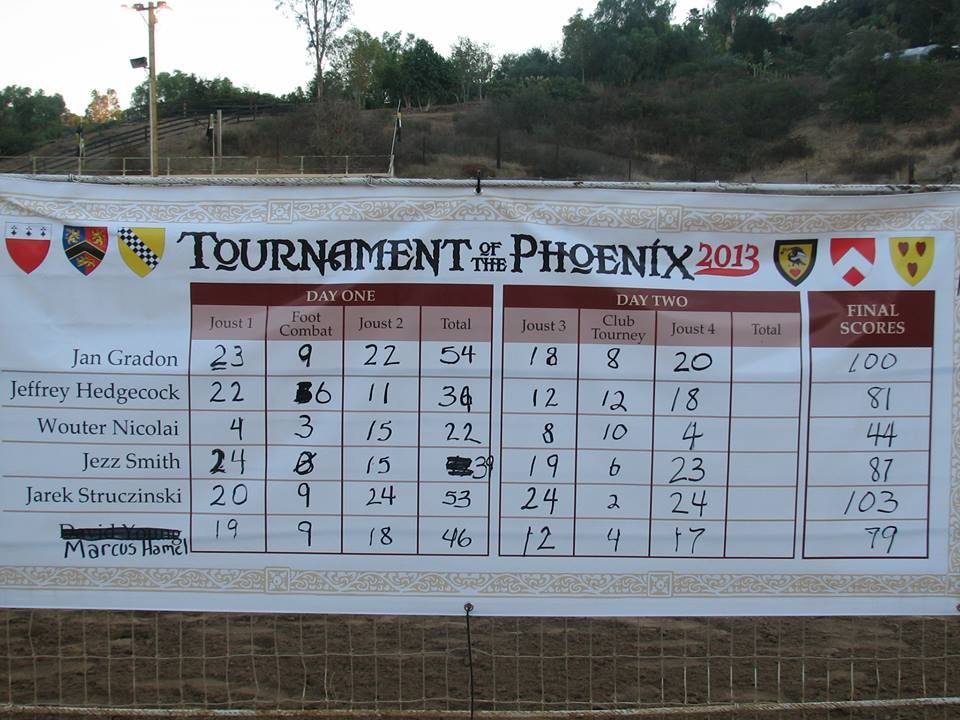
Polish jouster Jarek Struczynski earned the title of tournament champion, just beating his fellow Pole Jan Gradon by three points. Here is what Jan had to say about the tournament:
"I was invited to the TotP["Tournament of the Phoenix"] for the second time. I won the tournament back in 2011, and was very happy to come back together with Jarek Struczynski. I was really looking forward to jousting there as I really enjoyed the joust in 2011. I knew I was going to ride again on Petrus who is a great horse. I knew all the competitors except David Young, whom I never jousted before. Unfortunately, he damaged his hand prior the event and couldn't compete. Marcus Hamel, who was to be the Knight of Mercy stepped in.

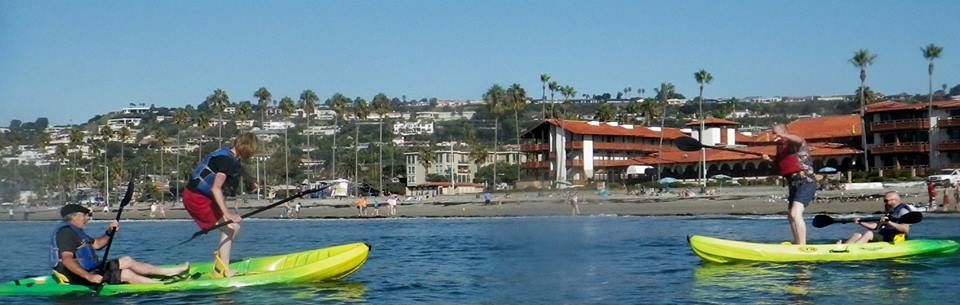
Prior the tournament, we had a great time in California. We rode a cowboy trail with Chad Waldhauser, who also provided horses for the TotP, had some roping practice, and did a trail in Grasslands preserve. We also did some kayaking in the ocean, and organized probably the first kayaking joust ever.

Left to right: Jezz Smith, Wouter Nicolai, Jan Gradon and Jarek Struczynski - kayak jousting
(photo by Leslie Chappell Britt)
The competition at the TotP was very fierce, with many hard hits. For most of us, the weather was the challenge, as most of the Competitors came from much colder weather. For me, the foot combat was the most tiring event. After having fought 3 duels. I couldn't continue as I couldn't catch my breath, and this is when Marcus Hamel became my champion and fought my last duel and won for me. I'm very happy, that through the whole tournament, me and Jarek were very close in points and ended up on 1st and 2nd place. Of course I hoped to win the TotP, as it would be the first time that someone got the Phoenix prize twice, but still I'm very happy with Jarek's victory as he deserved it." – Jan Gradon


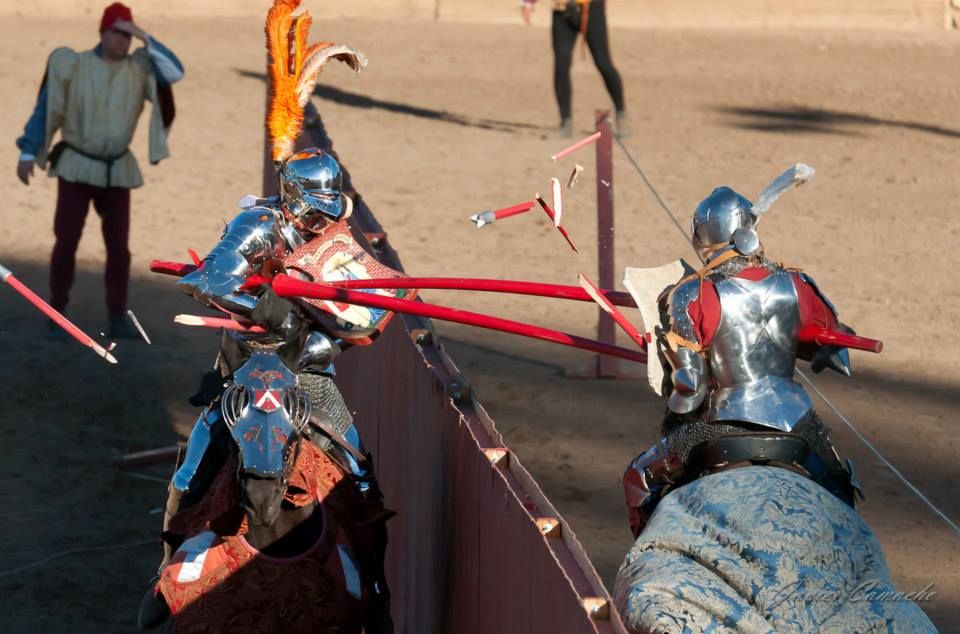
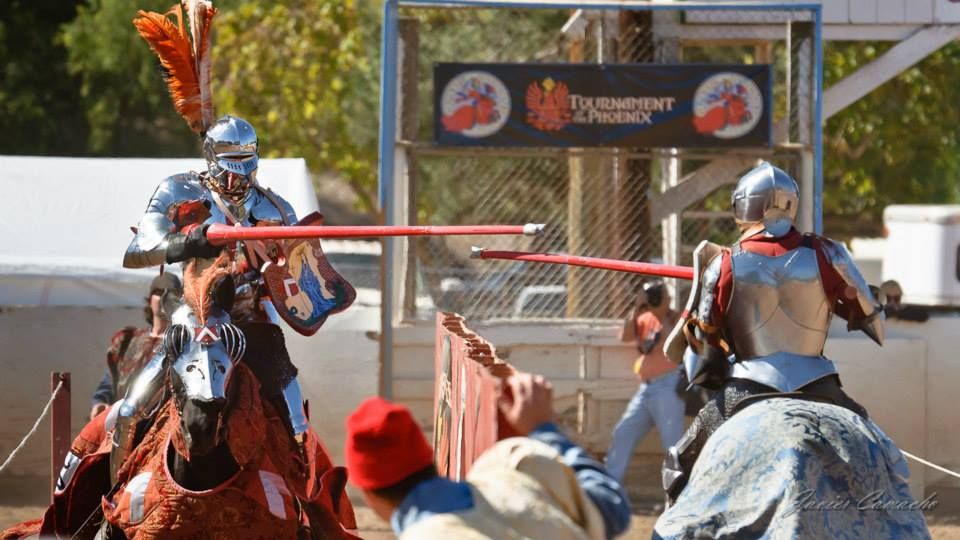
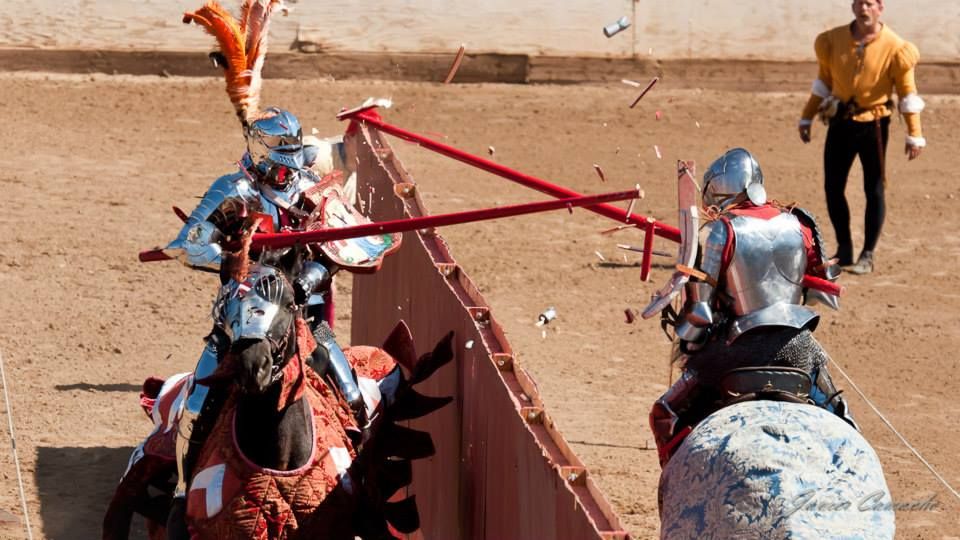
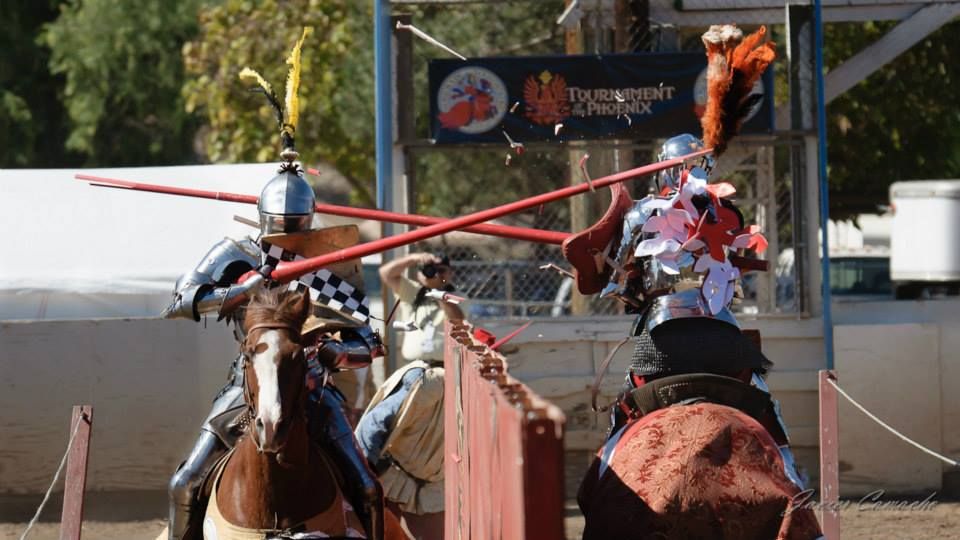
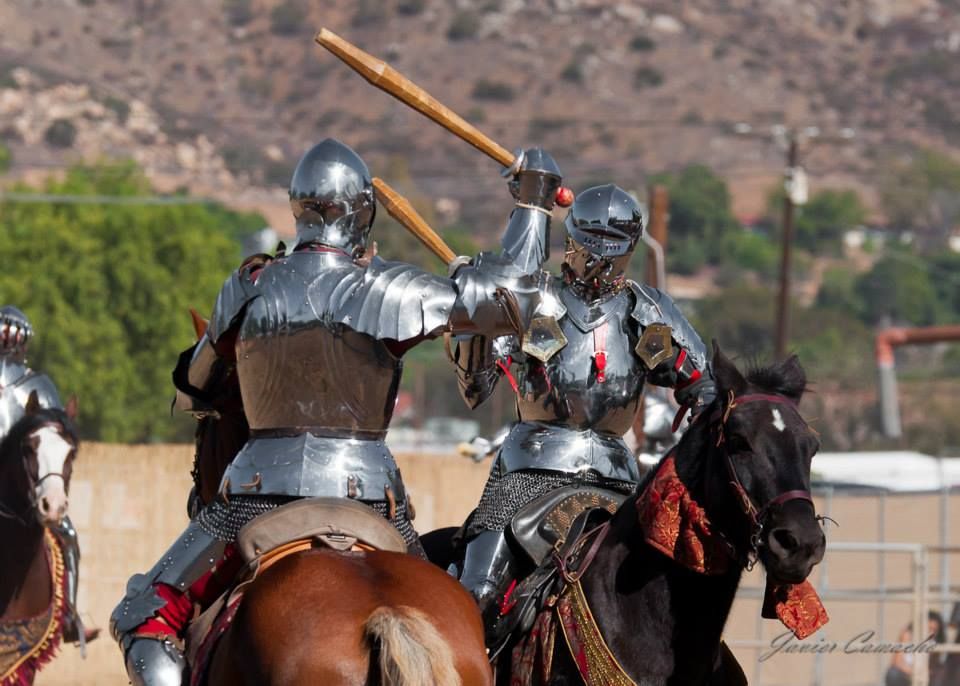
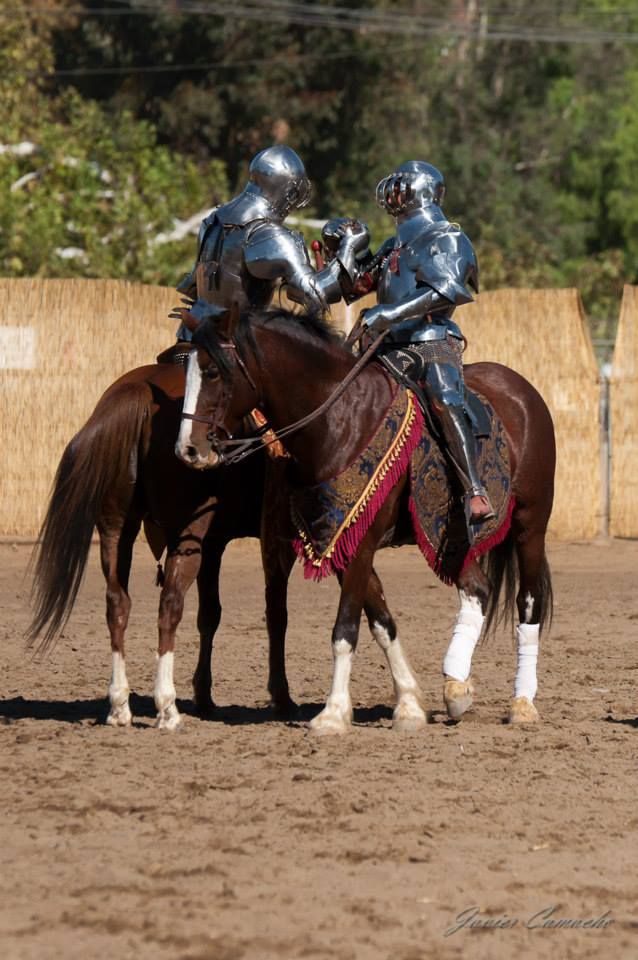
Jarek Struczynski(left) and Marc Hamel(right) joust(photo by J. Javier Camacho)


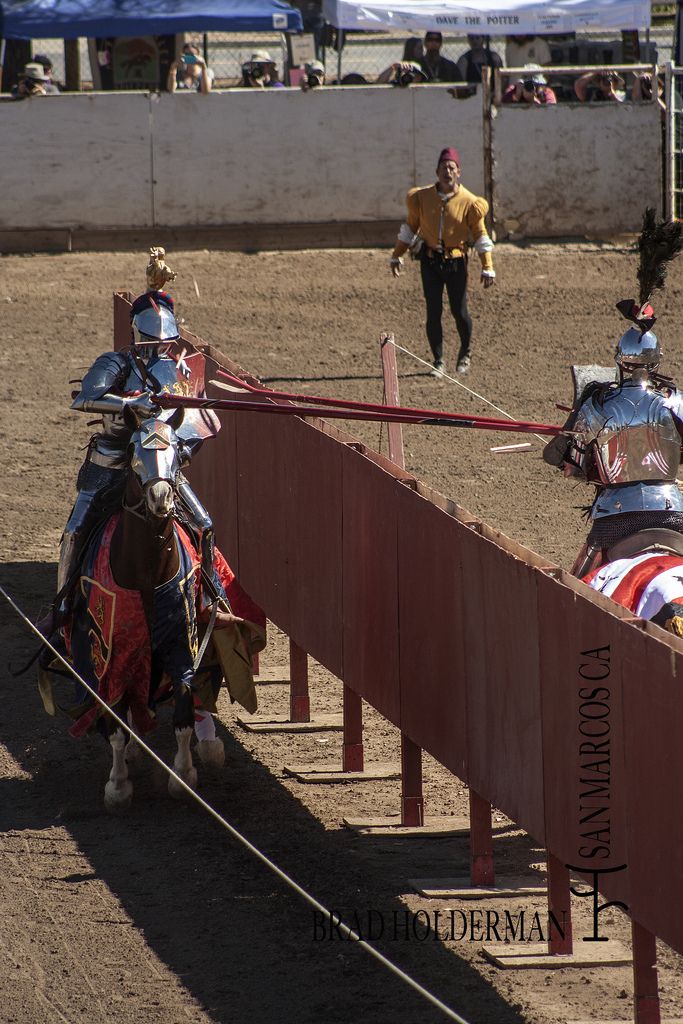
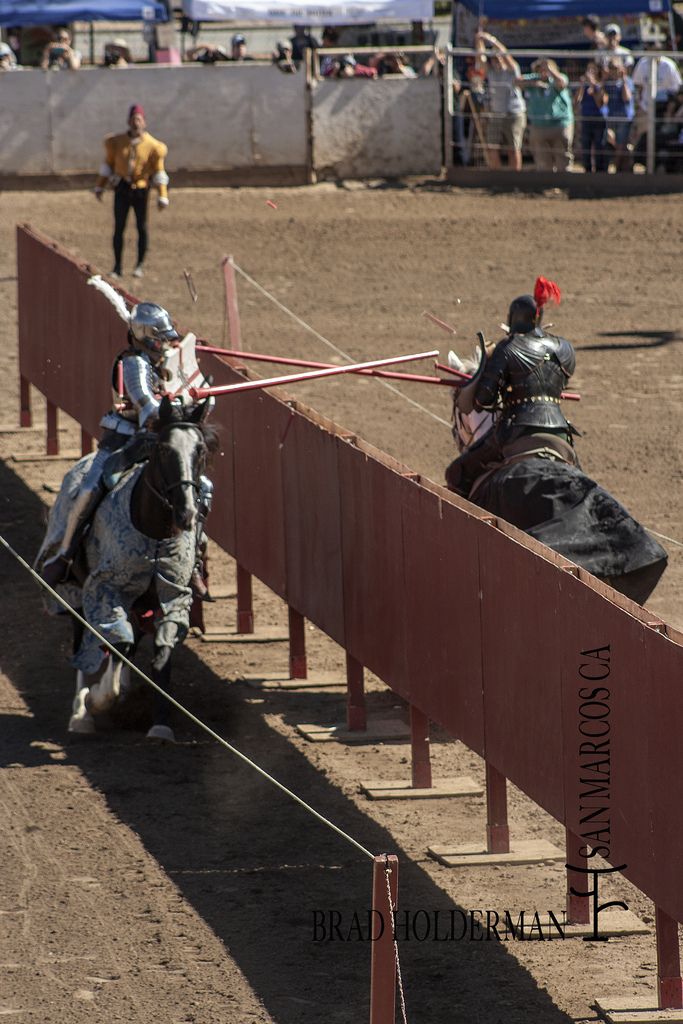
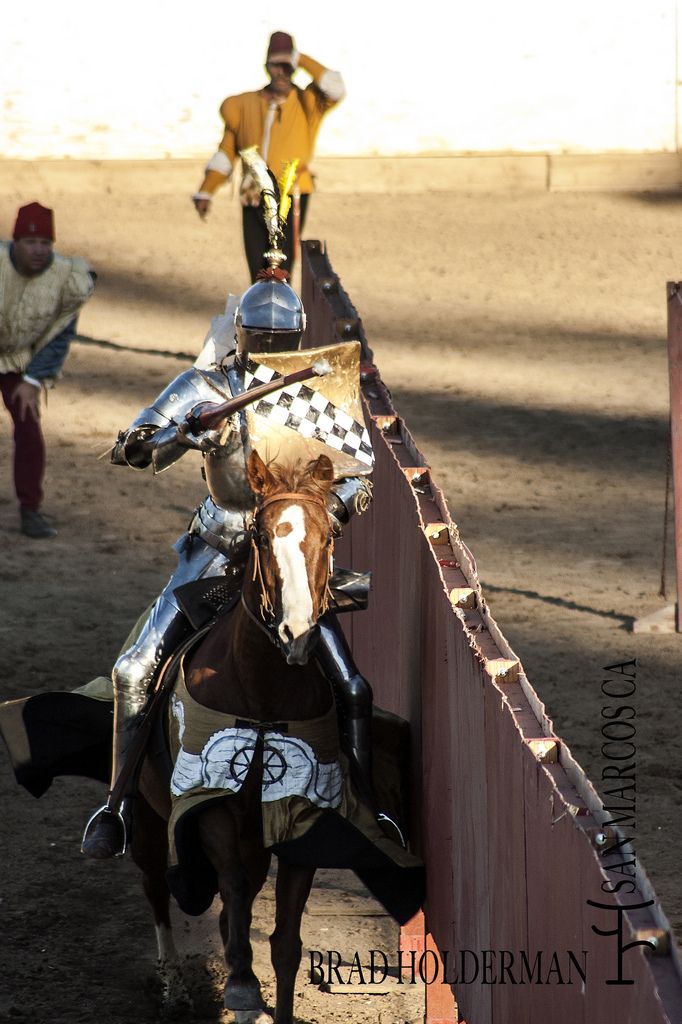
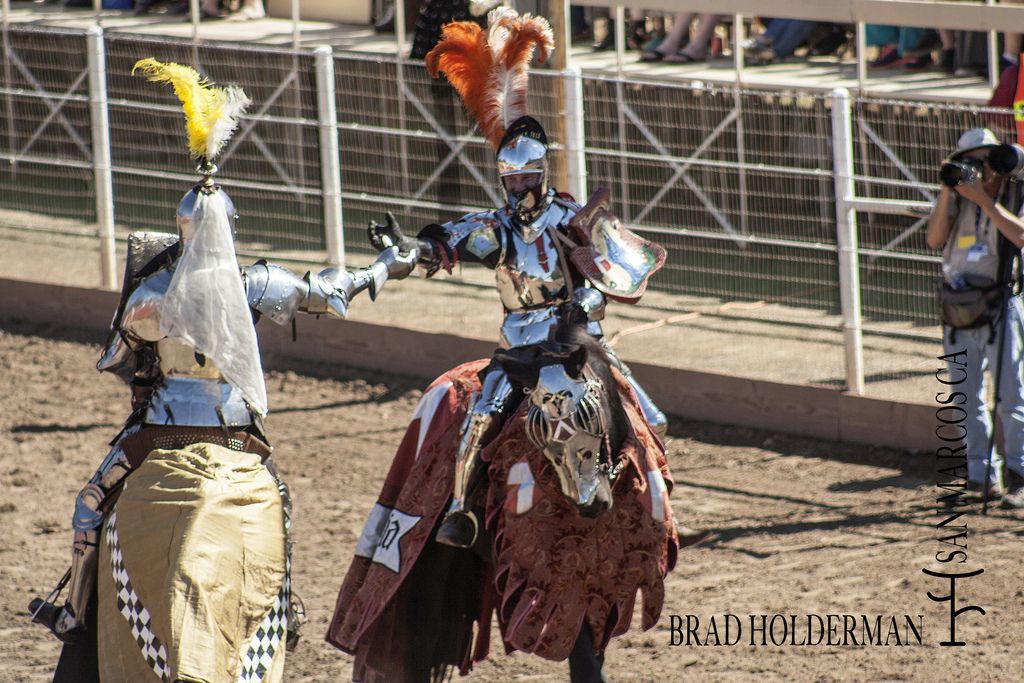
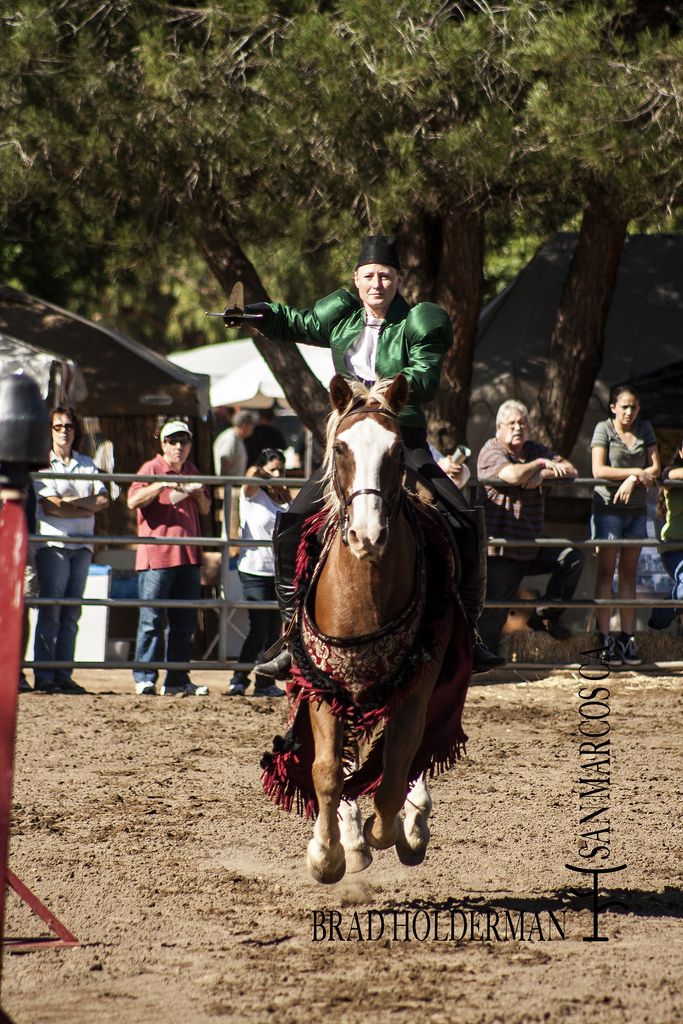
Jan Gradon(left) and Jezz Smith(right) jousting(photo by Brad Holderman)

More photos of the tilting by J. Javier Camacho(click to embiggen):


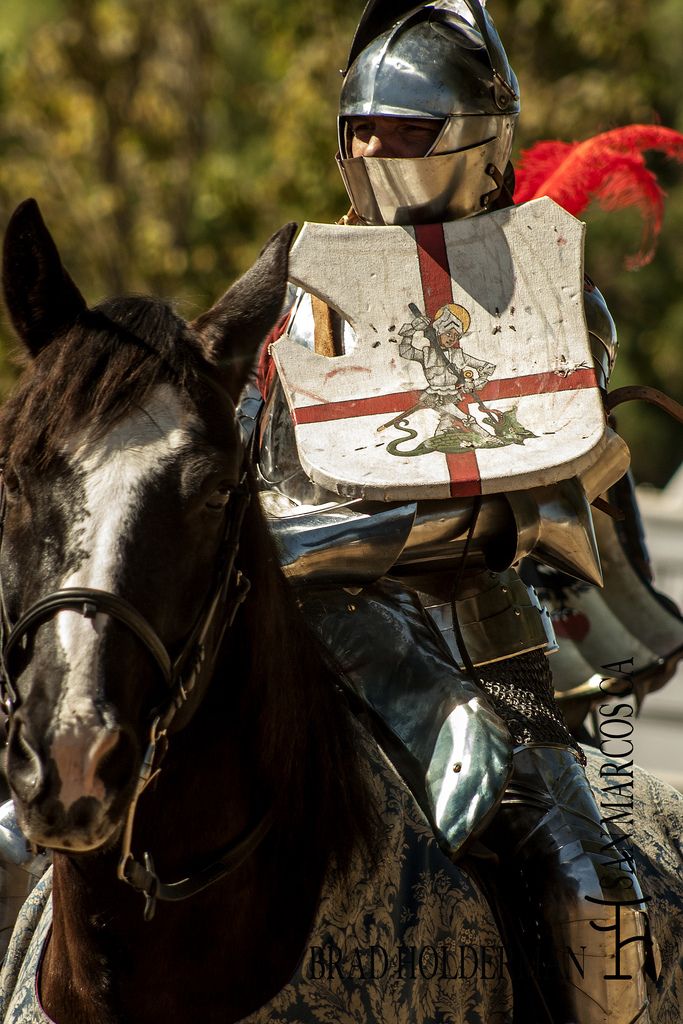
Photos of the tilting by Brad Holderman(click to embiggen):


During the course of the tournament, Marc Hamel, who had originally traveled to the event with the intention of being the non-competitive Knight of Mercy, ended up competing in the place of several jousters in both the tilt and the Pole Axe duels. Marc was already in California when David Young notified TotP that he was not going to be able to compete due to an injured hand. Marc had not brought his own distinctive armour, but was willing to compete in David's place if a suit of armour could be found to fit him. Fortunately, one of Jeffrey Hedgecock's old sets of armour fit Marc quite well, so he was able to step in and take David's place as a competitor.


Marc Hamel in Jeffrey Hedgecock's old jousting armour and shield(photo by Brad Holderman)

Later, during the pole axe combat, he not only fought his own/David's duels, he also stepped in to fight in place of Jan Gradon and Jezz Smith when they were unable to continue. Marc tied for first place in the pole axe competition with Jarek Struczynski and Jan Gradon(Marc obviously did a good job as Jan's champion).


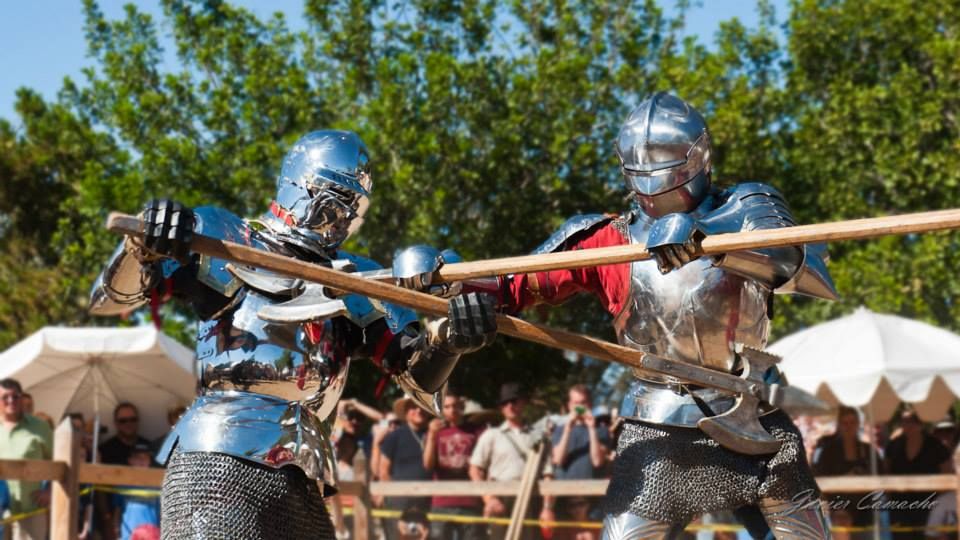
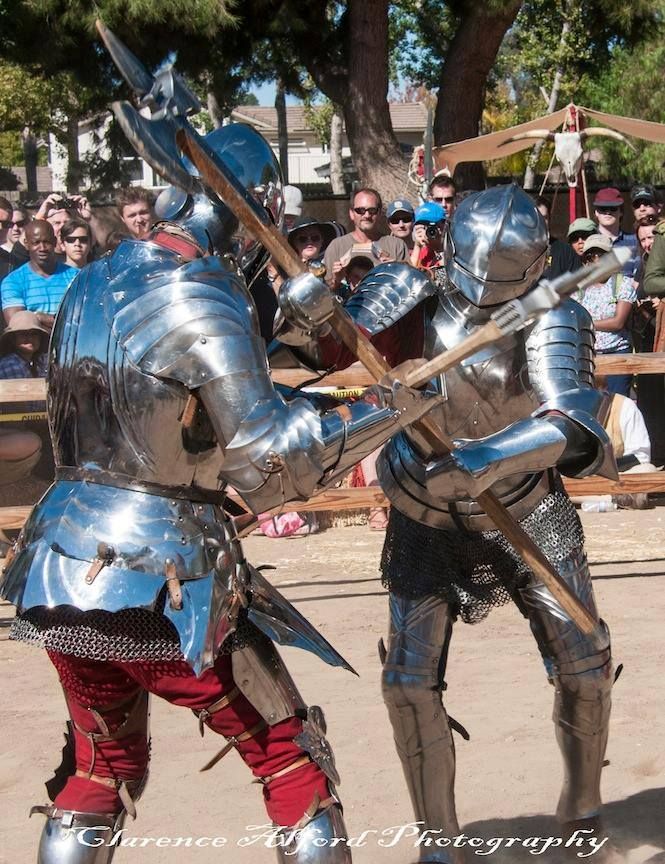
Jarek Struczynski(left) and Marc Hamel(right) in a pole axe duel(photo by J. Javier Camacho)

More pictures of the pole axe duels by J. Javier Camacho(click to embiggen):


Here is what Marc Hamel had to say about the tournament:
“It was a great tournament. David Young let me ride his horse Hardy in his place, and the first session was excellent. We went for the poleaxe session – I was trying to forget that famous hit in the face that I received last year. I made all my 4 duels plus 2 others for Jan Gradon and Jezz Smith (they were too exhausted). Let's just say that I didn't rest much.

The second session of jousting was more tough. Jarek and I hit on each other like trains, and I injured my hand seriously and had to withdraw for the remainder of the session. The second day was good as well. Jarek and Jan were at the top of their game. As for me, I couldn't break my lances with efficiency, but I kept going because I could still provide a good target for my opponents.

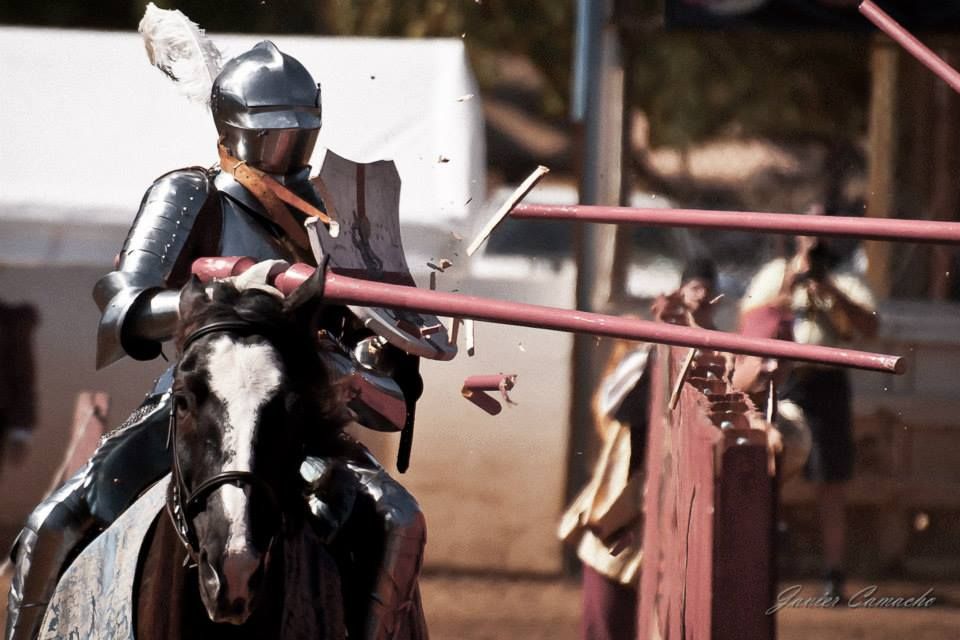
A lance shatters against Marc Hamel's ecranche during the joust(photo by J. Javier Camacho)
I want to raise my lance for Wouter Nicolai. On the scoring board he may have finished last, but he rode a horse who was not easy to ride and never took any chances to break his lances unless it was perfect. I think of him as an excellent technician, with a great sense of honor, with clean runs every time. Jarek won the tournament with grace and humility, and I hope to be like him one day.” – Marc Hamel

Based on his honourable behavior throughout the tournament, Wouter Nicolai of the Netherlands was chosen to receive the Chivalry Award for 2013.


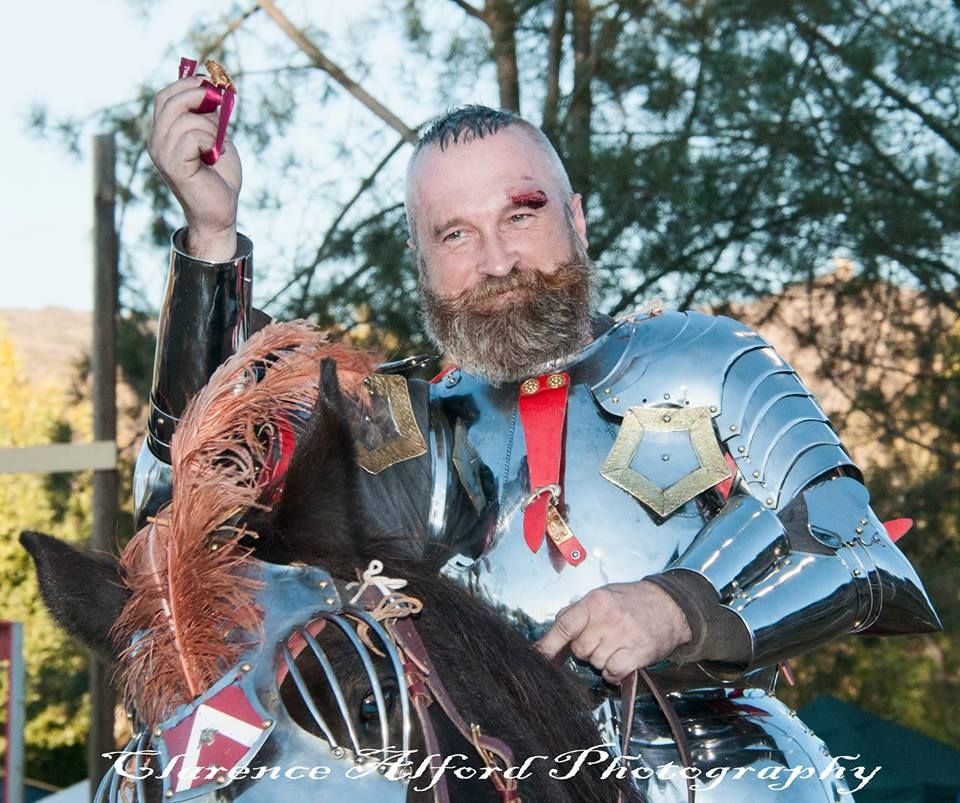
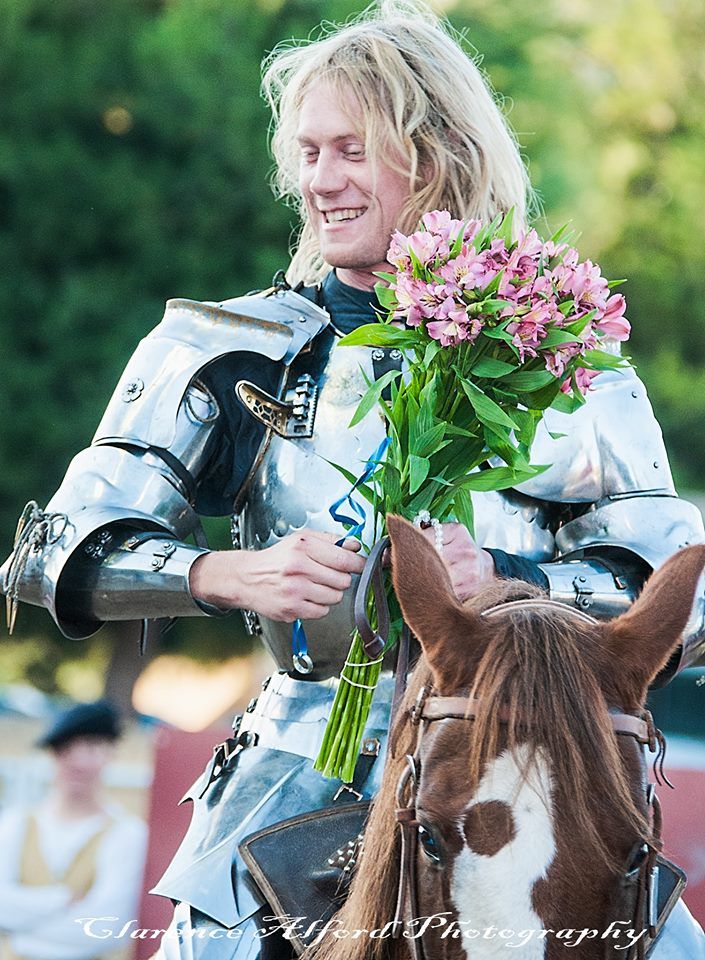
Wouter Nicolai, Chivalry Award(photo by Clarence Alford Photography)

Here is what Wouter had to say about the tournament and winning the Award of Chivalry:
"Participating at "The Tournament of the Phoenix" was a very good experience. I found it both a fun and a high quality event. I found it very difficult to adjust my riding style to a western horse(Spot). Despite my problems riding Spot, I found him an exceptionally good horse for jousting and melee. He is brave and responds well. While I enjoy doing jousting competitions, I am not really a competitive jouster. The reason that I joust is because I like the history of the tournament. I try to get as close as possible to experience a 15th century tournament. This makes the Chivalry Award for me personally the most significant prize. I am greatly honoured to be chosen to receive it." – Wouter Nicolai

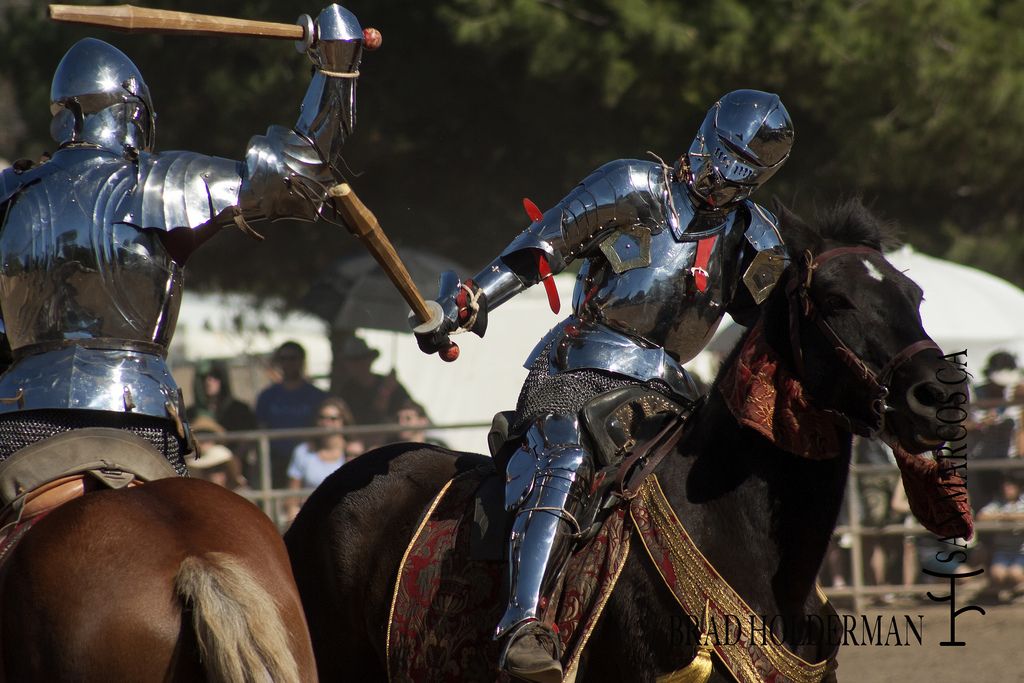
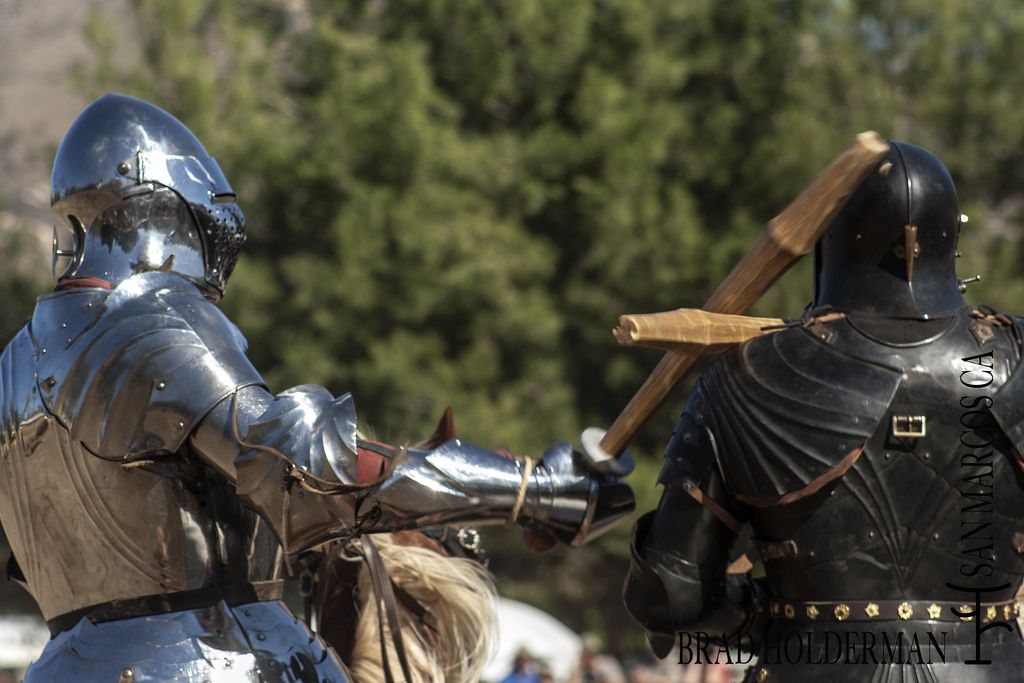
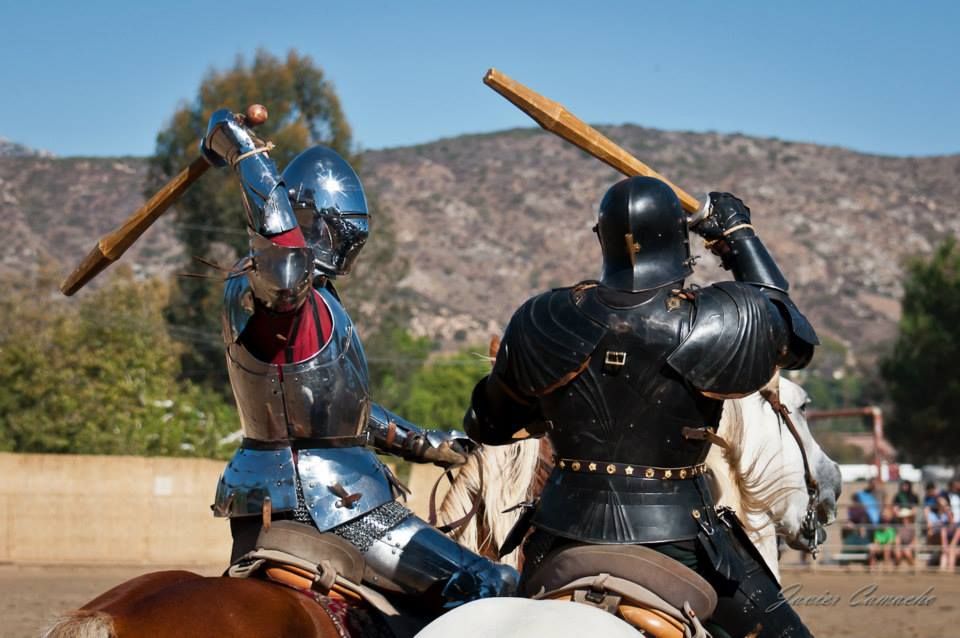
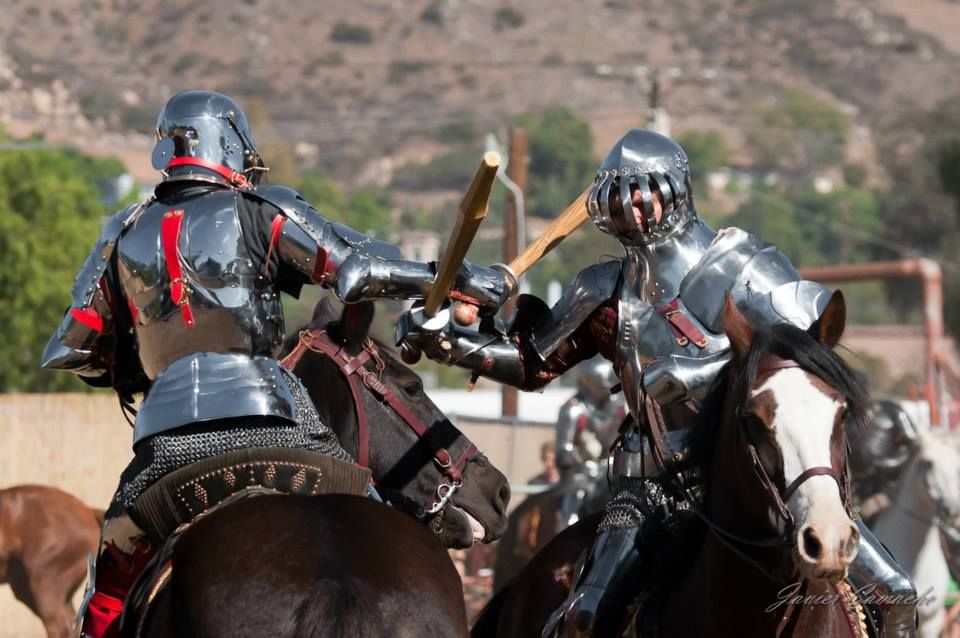
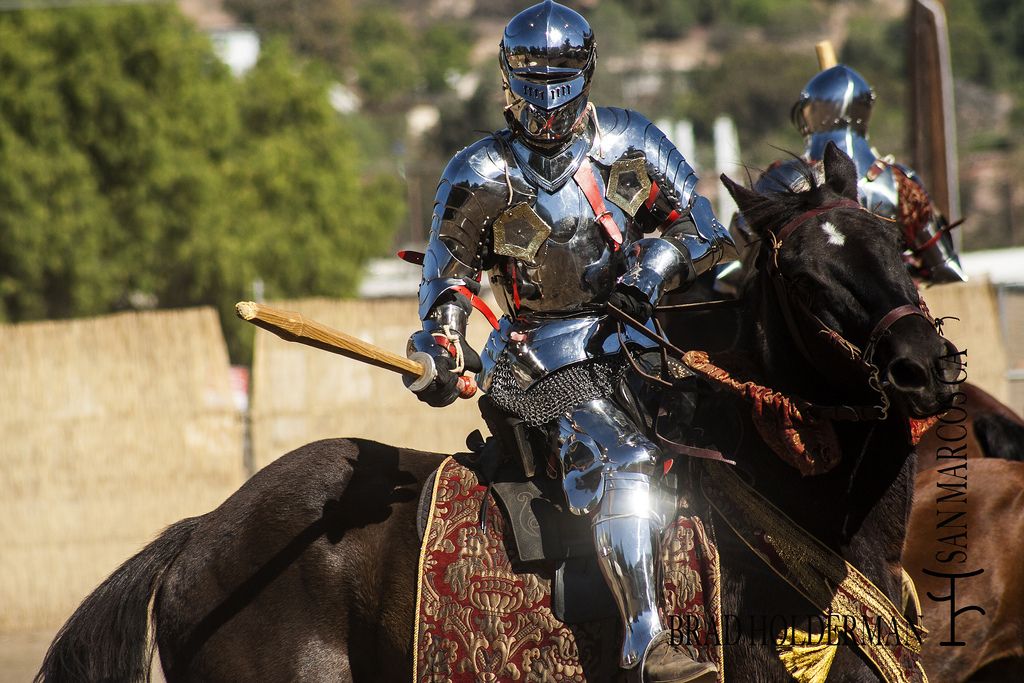
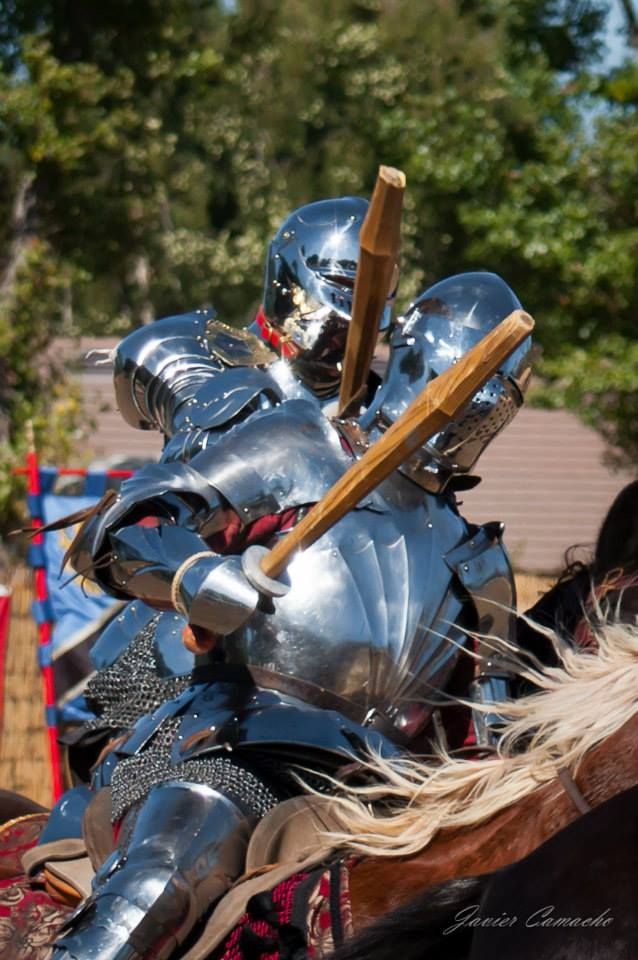
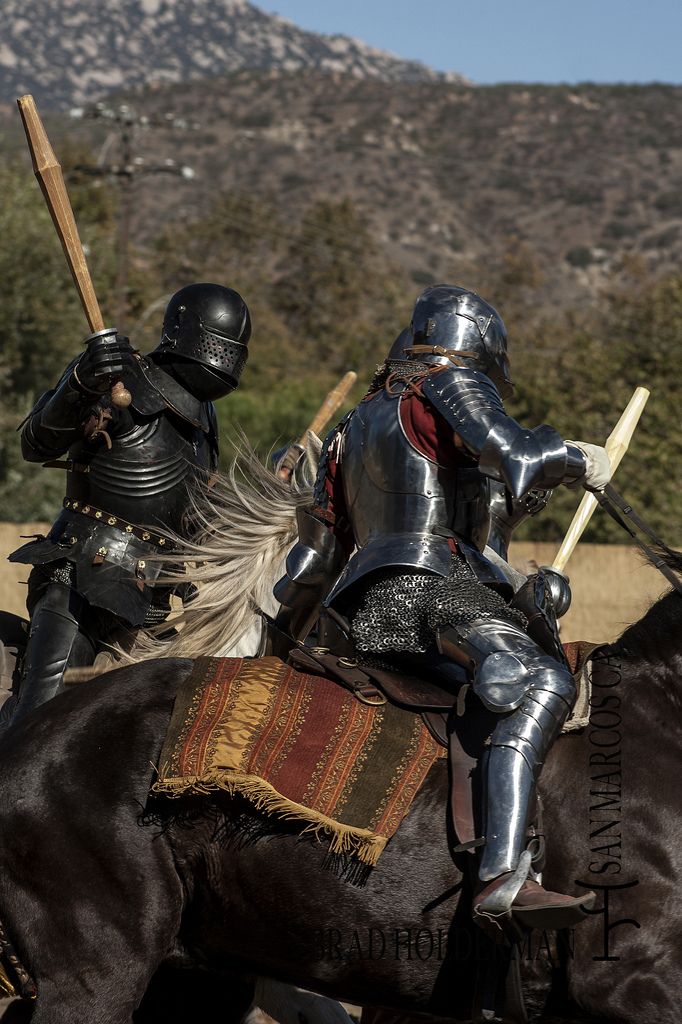
As part of the overall tournament competition, there was also a mounted melee which was fought using wooden clubs. Jeffrey Hedgecock earned the most points during the mounted melee.


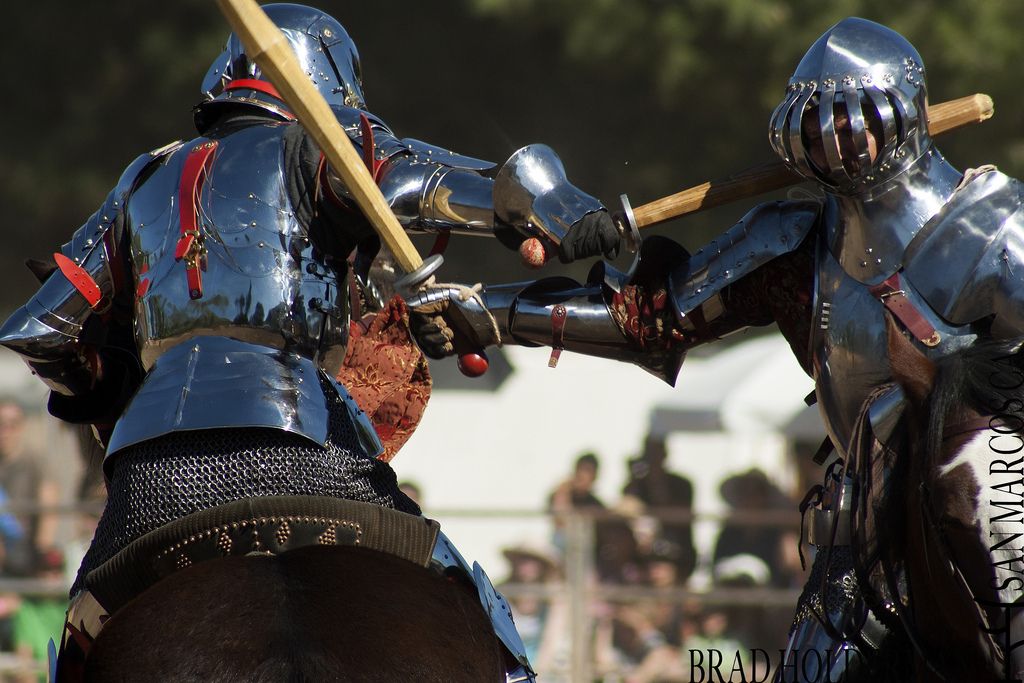
Jarek Struczynski(left) and Jeffrey Hedgecock(right) exchange blows during the mounted melee
(photo by Brad Holderman)

More pictures of the mounted melee by Brad Holderman and J. Javier Camacho(click to embiggen):


A short video of the mounted melee:

Tournament of the Phoenix 2013: Mounted Melee(video from the Tournament of the Phoenix Facebook page)


The final scores of "The Tournament of the Phoenix 2013"
(photo from the Tournament of the Phoenix Facebook page)


The jousters of "The Tournament of the Phoenix 2013"
Left to Right: Wouter Nicolai, Jezz Smith, Jan Gradon, Jarek Struczynski, Jeffrey Hedgecock and Marc Hamel (photo by Brad Holderman)

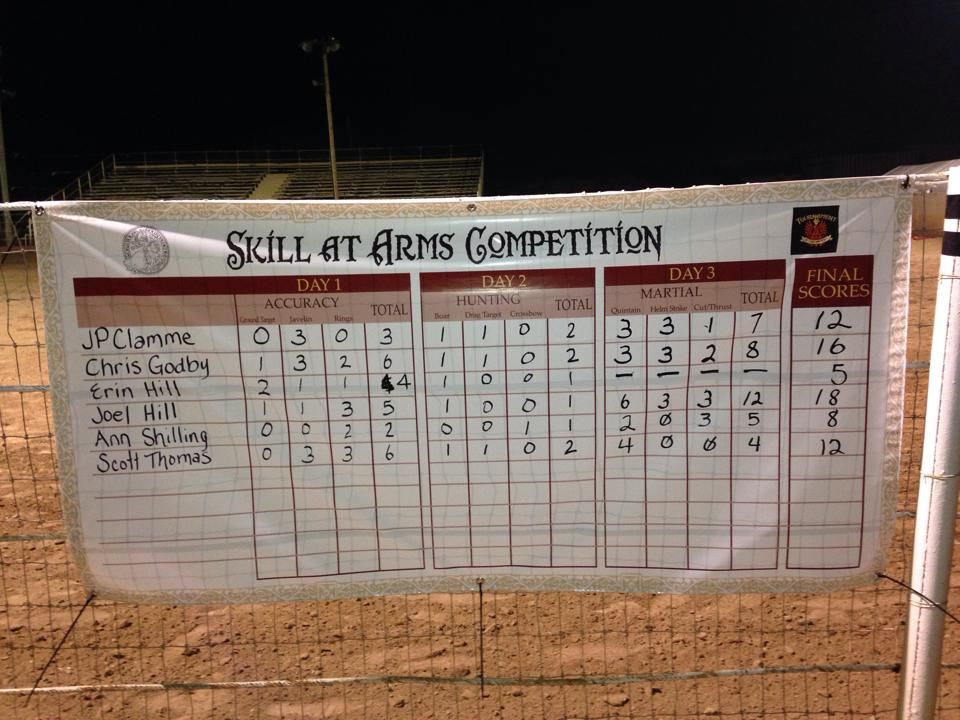
In addition to the six jousters who competed in the main jousting tournament, there were six other competitors who participated in a Mounted Skill at Arms competition. Joel Hill of USA won the MSA competition.


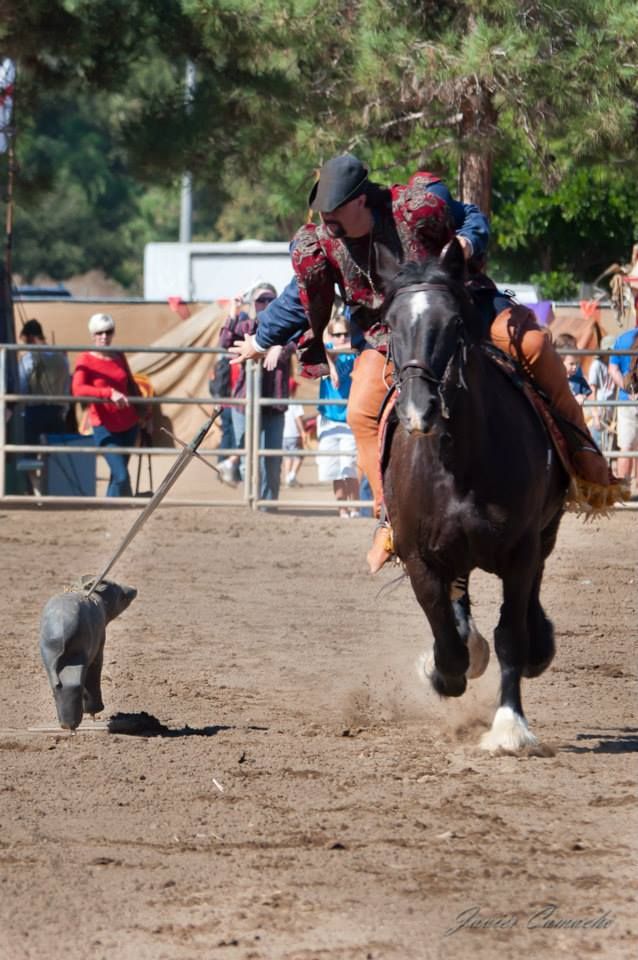
Joel Hill stabs the "pig" during the MSA competition(photo by J. Javier Camacho)

Here is what Joel Hill had to say about the Mounted Skill at Arms competition:
"The competitors[main jousters] did not participate but rather acted as our mentors, gave us advice and cheered for us. Ann Schilling was the only competitor to hit the boar with the crossbow which was a big accomplishment." – Joel Hill


Ann Shilling during the MSA competition(photo by Brad Holderman)


The final scores of the MSA competition
(photo from the Tournament of the Phoenix Facebook page)

You can see more pictures from the tournament in the Tournament of the Phoenix 2013 album in Brad Holderman's Flickr account.